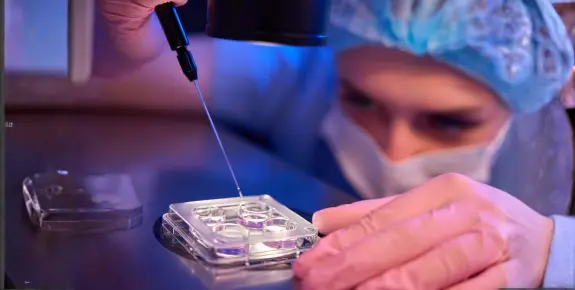

Infertility is not selective. It does not discriminate by income, province, race, or social background. Yet in South Africa — one of the most unequal societies in the world — access to fertility treatment is deeply, profoundly unequal. For the majority of South African women who face fertility challenges, the pathway to parenthood through modern reproductive medicine is simply out of financial reach. This is not a story of individual failure. It is a systemic one. And it deserves to be told honestly.
The Income Gap in Reproductive Healthcare
South Africa’s healthcare system operates on a two-tier model: a heavily strained public sector and a private sector that provides high-quality care — at a price. Approximately 83% of South Africans depend on the public healthcare system, which offers limited to no fertility treatment services. Private fertility clinics, where IVF and other assisted reproductive technologies (ART) are available, sit firmly within the private sector. The cost of a single IVF cycle in the private sector can exceed R80,000 when medications are included. For a family earning a median South African household income, this is not a month’s salary — it is closer to a year’s earnings. The financial barrier to entry is not merely high; for most South Africans, it is insurmountable.
Medical Aid Cover Is Not the Solution for Most
It might be tempting to assume that medical aid cover is the answer. But only around 17% of South Africans are medical aid members — and of those, many are on low-cost benefit options (LCBOs) or hospital plans that include little to no fertility benefits. Even among those on comprehensive medical aid plans, fertility cover is often partial, limited, and comes with significant conditions attached. As discussed in Does Medical Aid Cover IVF in South Africa?, IVF is not a Prescribed Minimum Benefit, meaning schemes are not obligated to cover it. Those who do often impose annual or lifetime rand limits that fall well short of actual treatment costs. Medical aid can be a meaningful contributor — but for most South African women facing infertility, it does not close the access gap.
Rural and Peri-Urban Women Are Disproportionately Excluded
Access to fertility care in South Africa is also highly geographically concentrated. The majority of fertility clinics are located in Gauteng, the Western Cape, and KwaZulu-Natal’s major urban centres. A woman in Limpopo, the Eastern Cape, or a peri-urban area faces not only financial barriers but also logistical ones — travel costs, accommodation during monitoring cycles, and repeated time off work. For women who are already financially stretched, the indirect costs of fertility treatment — transport, childcare, time off work — can be as prohibitive as the direct clinical costs.
The Emotional Tax of Financial Barriers
There is a specific kind of grief that comes from knowing that a treatment exists that might help you — and not being able to access it. It is a grief layered with anger, helplessness, and often shame. Many women internalise the financial barrier as a personal failing, when the reality is that they are caught in a system that was not designed to serve them. This emotional dimension is explored in depth in: The Emotional and Financial Burden of
Infertility. What is important to acknowledge here is that financial exclusion from fertility care is a form of inequality that deserves far more attention than it currently receives in public discourse.
Policy Gaps That Perpetuate Inequality
The absence of fertility treatment from the PMB framework is a significant policy gap. While the Council for Medical Schemes has in recent years explored the expansion of PMBs, progress has been slow. Advocates within the fertility sector have consistently called for IVF and ART to be included in the PMB list — a change that would require schemes to offer cover across all plan types. The National Health Insurance (NHI) framework, which aims to extend healthcare coverage to all South Africans, does not currently include fertility treatment in its proposed benefit design. Without deliberate policy intervention, access to fertility care will remain a privilege
rather than a right. Understanding the PMB framework and where fertility currently sits within it is explored in:
Understanding PMBs and Fertility-Related Conditions.
What Can Be Done?
Change at a systemic level requires policy reform, advocacy, and public pressure. But there are also practical steps that individual patients and healthcare stakeholders can take.
For Patients
Know your rights under the Medical Schemes Act. Ask your scheme detailed questions about what is covered. Explore whether your diagnostic costs — which may be covered even when treatment is not — can reduce your overall financial burden. Seek out fertility clinics that offer transparent pricing and payment flexibility.
For Employers
Employers who provide medical aid as part of employee benefits have a meaningful opportunity to select schemes and plans that include fertility benefits. As the conversation around reproductive health in the workplace matures, this is increasingly becoming a consideration for forward-thinking organisations.
For Medical Aids
Schemes that do include fertility benefits signal to their members that reproductive health is valued. There is growing evidence globally that providing ART cover is cost-effective when considered against the broader healthcare costs associated with infertility.
Frequently Asked Questions
Is there any free or subsidised IVF available in South Africa?
State hospitals in South Africa do not generally offer IVF services. Some academic hospitals affiliated with universities have historically offered fertility services at reduced rates. Availability is limited and waiting lists can be significant. Patients should enquire directly with their regional public hospital or academic medical centre.
Can I get a government grant for fertility treatment in South Africa?
There is currently no national government grant specifically for fertility treatment in South Africa. Some patients explore medical financing options through banks or specialist medical credit providers.
Why is IVF not a Prescribed Minimum Benefit in South Africa?
The PMB list was defined when the Medical Schemes Act was enacted in 1998 and has been updated incrementally since. Fertility treatment was not included at the time. Advocates continue to call for its inclusion, but the process for updating PMBs is lengthy and complex.