If you or your partner have been diagnosed with male factor infertility, or if a previous IVF cycle resulted in poor fertilisation, your fertility specialist has likely mentioned ICSI. It is one of the most important advances in reproductive medicine of the last 30 years.
This article explains exactly what ICSI is, when it is recommended, how it differs from standard IVF, and what to expect — including costs at South African clinics.
Related reading: Male Infertility: Causes, Tests & Treatments | The Sperm Test Explained | The IVF Process Step-by-Step
What Does ICSI Stand For?
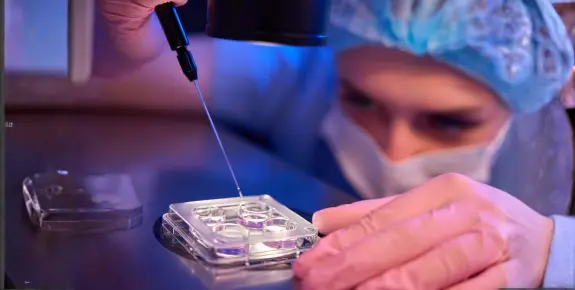
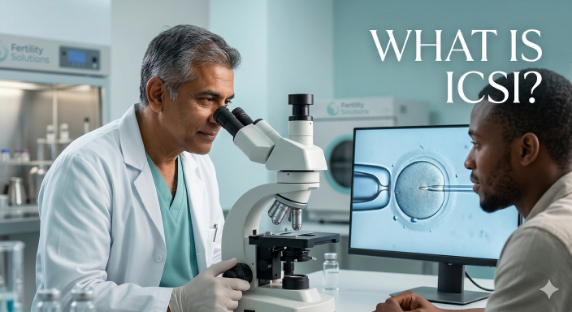
ICSI stands for Intracytoplasmic Sperm Injection. In simple terms, it means injecting a single sperm directly into an egg using an extremely fine glass needle, guided by a high-magnification microscope.
In conventional IVF, eggs and a prepared sperm sample are placed together in a dish and fertilisation happens naturally. ICSI bypasses this entirely — the embryologist selects the single best sperm and injects it directly into the centre (cytoplasm) of a mature egg.
When Is ICSI Recommended?
Male factor infertility
- Low sperm count (oligospermia) — fewer than 15 million sperm per millilitre
- Very poor motility (asthenospermia) — fewer than 32% showing forward movement
- Abnormal morphology (teratospermia) — fewer than 4% normal forms
- Severe combined male infertility — for a full explanation, see Male Infertility: Causes, Tests & Treatments
Surgically retrieved sperm
- When sperm cannot be ejaculated and must be retrieved surgically (PESA, TESA, TESE, micro-TESE)
- Men who have had a vasectomy
Previous IVF failure
- Unexpectedly low or failed fertilisation in a previous conventional IVF cycle
Genetic testing or frozen eggs
- When embryos will undergo PGT-A genetic testing — provided by Next Biosciences (nextbio.co.za)
- When frozen donor eggs are used — the vitrification process alters the egg’s outer coating
ICSI Step by Step
ICSI is performed as part of a standard IVF cycle. Steps 1–4 (stimulation and egg retrieval) are identical — see the full IVF Process Guide. The difference begins at fertilisation:
- The embryologist selects the single healthiest sperm under 200–400× magnification
- The egg is held with a fine suction pipette; the selected sperm is immobilised and loaded into an injection needle finer than a human hair
- The needle pierces the egg’s outer coating and the sperm is deposited directly into the cytoplasm
- The following morning, fertilisation is confirmed; successfully fertilised eggs continue to develop over 3–5 days
- Embryo transfer and pregnancy test proceed identically to standard IVF
ICSI Success Rates
- Fertilisation rate: 70–80% of injected eggs fertilise successfully
- Pregnancy rates from ICSI cycles are comparable to conventional IVF and depend primarily on egg age and embryo quality
- In male factor infertility, ICSI dramatically improves the chance of fertilisation compared to conventional IVF
What this means: With ICSI, nearly every man — regardless of how low his sperm count is — has a path to biological parenthood, provided at least some sperm can be found. Even men with azoospermia can often have sperm retrieved surgically and used for ICSI.
ICSI vs Conventional IVF: Key Differences
- Conventional IVF: sperm and eggs placed together; natural selection determines fertilisation
- ICSI: the embryologist selects one sperm and injects it into one egg
- No difference in stimulation, egg retrieval, or embryo transfer
- ICSI adds R5,000 – R12,000 in laboratory costs
- Not necessary when sperm parameters are normal and previous fertilisation has been successful
Where Is ICSI Available in South Africa?
All of the following SASREG-accredited clinics in the Fertility Solutions directory offer ICSI as part of their IVF service:
Clinics Offering IVF with ICSI
| Clinic / Agency | FS Directory | External Website |
| Cape Fertility (Cape Town) | View on FS → | capefertility.co.za |
| Aevitas Fertility Clinic (Cape Town) | View on FS → | aevitas.co.za |
| Neo Fertility (Johannesburg) | View on FS → | neofertility.co.za |
| Genesis Reproductive Centre (Pretoria) | View on FS → | genesisrc.co.za |
| Wilgers Infertility Clinic (Pretoria) | View on FS → | wilgersinfertility.co.za |
| Durban Fertility Clinic | View on FS → | durbanfertilityclinic.co.za |
| C.A.R.E Clinic (Westville) | View on FS → | careclinic.co.za |
| VitaLab KZN (Umhlanga) | View on FS → | vitalabkzn.co.za |
| Fembryo Fertility Clinic (Port Elizabeth) | View on FS → | fembryo.co.za |
Frequently Asked Questions
Is ICSI better than IVF?
ICSI is not universally better — it is the right tool for specific situations. When sperm parameters are normal and previous fertilisation has been successful, conventional IVF is equally effective and less costly.
Does ICSI increase the risk of birth defects?
Large-scale studies show no significant increase in birth defects. Any slight statistical association is related to the underlying cause of infertility, not the ICSI procedure itself.
Can ICSI be done with frozen sperm?
Yes. ICSI is routinely performed using frozen sperm — from a frozen sample, sperm donor, or surgically retrieved and frozen sperm. See the full guide: Male Infertility: Causes, Tests & Treatments.
Is ICSI covered by medical aid?
In most cases, no — unless an ART benefit is available. See the Medical Aid Coverage Guide for details.
Disclaimer: This content is for educational purposes only and does not constitute medical advice. Always consult with a qualified healthcare provider before making decisions about fertility treatment.
About the Author
Leigh-Ann Geydien is the founder of Fertility Solutions, South Africa’s only dedicated fertility directory. With a deep commitment to patient advocacy, she built the platform to bridge the gap between those navigating fertility challenges and the clinics and reproductive health specialists best placed to help them.