
If you’ve been told that IVF might be your path to parenthood, you probably have a hundred questions. What actually happens? How long does it take? Will it hurt? What are your chances?
The good news is that IVF — in vitro fertilisation — is one of the most well-understood and successful fertility treatments available today. Millions of babies worldwide have been born through IVF, and in South Africa, accredited fertility clinics are achieving pregnancy rates comparable to the best international centres.
This guide walks you through every stage of the IVF process in plain, honest language — from your very first consultation to the moment you take a pregnancy test. Whether you’re just starting to explore your options or you’re about to begin treatment, knowing what lies ahead makes every step more manageable.
What this means for you: IVF is not a single procedure. It’s a carefully coordinated series of steps completed over several weeks, each designed to give an embryo the best possible chance of implanting and becoming a healthy pregnancy.
What Is IVF?
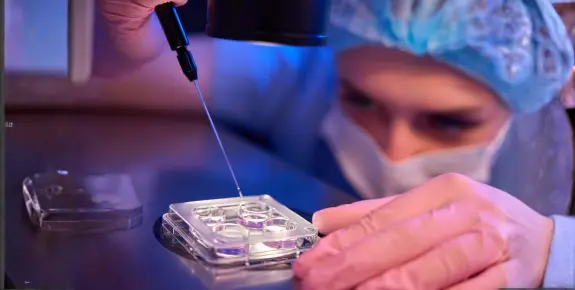
IVF stands for in vitro fertilisation — literally, ‘fertilisation in glass’. It’s a type of assisted reproductive technology (ART) in which eggs are retrieved from the ovaries, fertilised with sperm in a laboratory, and the resulting embryo is transferred back into the uterus.
IVF is recommended for people with a wide range of fertility challenges, including:
- Blocked or damaged fallopian tubes
- Severe endometriosis
- Low ovarian reserve or poor egg quality
- Male factor infertility (low sperm count, poor motility or morphology)
- Unexplained infertility after other treatments have not worked
- Recurrent miscarriages where genetic testing of embryos is needed
- Same-sex couples and single parents using donor eggs or sperm
How Long Does IVF Take?
A single IVF cycle takes approximately four to six weeks from the start of medication to the pregnancy test. However, the preparation — including consultations, blood tests, and scans — can begin several weeks before that.
Here is a typical IVF timeline:
- Weeks 1–2: Initial consultations, baseline investigations, and treatment planning
- Weeks 2–3: Ovarian stimulation (daily hormone injections)
- End of Week 3: Egg collection procedure
- Fertilisation and embryo development in the lab: approximately 3–5 days
- Embryo transfer: Day 3 or Day 5 (blastocyst stage)
- Two weeks after transfer: Pregnancy blood test
The IVF Process: Step by Step
Step 1 — Initial Consultation and Fertility Assessment
Before IVF begins, your fertility specialist will conduct a thorough assessment to understand the cause of your infertility and determine whether IVF is the right treatment for you.
This assessment typically includes:
- A transvaginal ultrasound to assess the uterus and ovaries
- Blood tests to measure ovarian reserve (AMH and Day 3 FSH levels)
- A semen analysis for the male partner
- A review of your medical history and any previous fertility treatments
Based on these results, your specialist will design a personalised treatment protocol — the type and dosage of medications used during IVF varies from person to person.
South African context: In South Africa, initial fertility assessments are often partially covered under Prescribed Minimum Benefits (PMBs) through medical aid, even if the full IVF treatment is not. Always check with your scheme before your first appointment.
Step 2 — Ovarian Stimulation
In a natural menstrual cycle, only one egg matures and is released. IVF requires multiple eggs to be retrieved to improve the chances of at least one developing into a viable embryo.
To stimulate the ovaries to produce multiple eggs, you will self-administer hormone injections (gonadotrophins) for approximately 10 to 14 days. These are subcutaneous injections — injected just under the skin — and most people find them manageable after the first few attempts.
During this phase, you will attend the clinic for regular monitoring appointments:
- Transvaginal ultrasounds to count and measure growing follicles
- Blood tests to check oestrogen levels
Your specialist will adjust your medication dosage based on how your ovaries are responding. The goal is to develop between 8 and 15 mature follicles.
What this means for you: Ovarian stimulation can cause bloating, mood changes, and mild discomfort. These side effects are temporary and a sign that the treatment is working. Report severe pain, rapid weight gain, or breathlessness to your clinic immediately — these can be signs of ovarian hyperstimulation syndrome (OHSS), which your team will monitor for closely.
Step 3 — The Trigger Injection
When your follicles have reached the right size (typically 18–20mm), you will administer a ‘trigger injection’ — usually human chorionic gonadotrophin (hCG) or a GnRH agonist. This triggers the final maturation of your eggs.
The timing of this injection is precise. Egg collection is scheduled exactly 34 to 36 hours later, so the trigger injection must be given at a specific time, even if that means the middle of the night.
Step 4 — Egg Collection (Egg Retrieval)
Egg collection is a minor surgical procedure performed under light sedation or general anaesthesia, so you will be comfortable and won’t feel any pain during the procedure.
A specialist uses a thin needle guided by ultrasound to aspirate fluid from the follicles in each ovary. The embryologist in the adjacent laboratory immediately examines this fluid to identify and retrieve any mature eggs.
The procedure typically takes 20 to 30 minutes. You will need someone to drive you home, and most people take the remainder of the day to rest.
On the same day, a semen sample is produced by the male partner (or donor sperm is thawed if applicable). The sperm is prepared in the laboratory for fertilisation.
Step 5 — Fertilisation in the Laboratory
Once eggs and sperm are both ready, the embryologist will fertilise the eggs using one of two methods:
- Conventional IVF: Eggs and a prepared sperm sample are placed together in a dish, and fertilisation occurs naturally
- ICSI (Intracytoplasmic Sperm Injection): A single sperm is selected and injected directly into each mature egg — recommended when sperm parameters are poor or fertilisation has failed previously
The following morning, the embryologist checks each egg for signs of fertilisation. Successfully fertilised eggs are called zygotes, and they will continue to develop in the incubator over the next 3 to 5 days.
Step 6 — Embryo Development and Monitoring
Over the next several days, the embryologist monitors the embryos as they divide and develop:
- Day 1: Fertilisation confirmed (two pronuclei visible)
- Day 2: 2–4 cell embryo
- Day 3: 6–8 cell embryo — transfer can occur at this stage
- Day 5: Blastocyst stage — the embryo has differentiated into an inner cell mass (which becomes the baby) and an outer layer (which becomes the placenta)
Most clinics now prefer to culture embryos to the blastocyst stage (Day 5) because blastocysts have a higher implantation rate and can be screened for chromosomal abnormalities if required.
Step 7 — Embryo Transfer
Embryo transfer is typically the simplest part of the process. It does not require sedation and is similar in sensation to a cervical smear.
A thin, flexible catheter is passed through the cervix into the uterus, guided by ultrasound. The embryo is deposited gently into the uterine cavity. The procedure takes approximately 10 to 15 minutes.
Your specialist will discuss how many embryos to transfer. In most cases, elective single embryo transfer (eSET) is recommended to reduce the risk of multiple pregnancy, particularly in women under 35 with good-quality embryos.
Any viable embryos not used in the fresh transfer can be frozen (vitrified) for future use.
What this means for you: Many people feel anxious about what they should — and shouldn’t — do after embryo transfer. The evidence is clear: normal daily activities are fine. Strict bed rest has not been shown to improve success rates. Continue taking your prescribed progesterone support medication as directed.
Step 8 — The Two-Week Wait
The two-week wait (TWW) is widely acknowledged as the most emotionally challenging part of IVF. After the transfer, there is nothing to do but wait for the pregnancy test.
Symptoms — or the absence of symptoms — during this time are not reliable indicators of whether IVF has worked. Progesterone support medication can cause symptoms that mimic both pregnancy and the arrival of a period.
Strategies that help during the TWW include staying gently active, leaning on your support system, limiting Google searches (seriously), and allowing yourself to feel whatever you feel without judgement.
Step 9 — The Pregnancy Test
Approximately 10 to 14 days after embryo transfer, you will return to the clinic for a blood pregnancy test (beta-hCG test). This is more accurate than a home pregnancy test at this stage.
A positive result means the embryo has implanted successfully. Your clinic will schedule a scan for approximately two weeks later to confirm the location and heartbeat.
A negative result, while deeply painful, does not mean IVF can never work for you. Your specialist will review every aspect of the cycle to refine the approach for a subsequent attempt.
IVF Success Rates: What to Expect
IVF success rates vary depending on several factors, most significantly the age of the egg provider:
- Under 35: approximately 40–50% live birth rate per cycle
- 35–37: approximately 30–40% per cycle
- 38–40: approximately 20–30% per cycle
- Over 40: approximately 10–20% per cycle (higher with donor eggs)
South Africa’s SASREG-accredited clinics report pregnancy rates comparable to European averages. Success rates also improve with frozen embryo transfers, as the uterine environment is often better prepared without the effects of stimulation medication.
Remember: A single ‘success rate’ doesn’t capture your personal situation. Your specialist can give you a realistic expectation based on your specific test results, age, and diagnosis.
Myths vs Facts About IVF
Myth: IVF always results in twins or triplets
Fact: Modern practice strongly favours single embryo transfer. Multiple pregnancy is a complication, not a goal. Most clinics transfer one embryo at a time to protect the health of both mother and baby.
Myth: IVF babies have more health problems
Fact: The vast majority of research shows IVF babies are as healthy as naturally conceived babies. Any slight increase in risk is associated with the underlying cause of infertility rather than IVF itself.
Myth: IVF is only for women
Fact: IVF addresses fertility challenges in both partners. If male factor infertility is the cause, IVF with ICSI is often the treatment — meaning the male partner’s fertility is being treated too.
Myth: IVF always works eventually
Fact: IVF significantly improves the chances of pregnancy, but it does not guarantee success. This is a difficult truth, and one that specialist teams take seriously when helping patients make informed decisions about how many cycles to pursue.
Frequently Asked Questions About IVF
How painful is IVF?
Most people manage the daily injections well with practice. Egg collection is performed under sedation. Embryo transfer causes minimal discomfort. Bloating and mild cramping during stimulation are common but manageable.
Can I work during IVF?
Yes, most people continue working throughout an IVF cycle. You will need to attend the clinic for several monitoring appointments — usually early morning. Discuss this with your employer as early as possible.
What happens to unused embryos?
Viable embryos can be frozen and stored for future use. Vitrification (flash freezing) has significantly improved frozen embryo survival rates. You can also donate unused embryos to other patients, to research, or have them respectfully disposed of — this is a deeply personal decision.
Is IVF covered by medical aid in South Africa?
Discovery Health offers an Assisted Reproductive Therapy benefit for qualifying members. Other schemes may cover diagnostic tests under PMBs. Most IVF treatment is self-funded. Use the Fertility Solutions cost guide to understand what to budget.
How many IVF cycles will I need?
There is no single answer. Many people achieve pregnancy in their first or second cycle. Others require more attempts, particularly if they are older or have a more complex diagnosis. Cumulative success rates across multiple cycles are significantly higher than single-cycle rates.
Your Next Steps
If you are considering IVF or have been recommended IVF by your gynaecologist, the most important first step is speaking with a specialist in reproductive medicine — not a general gynaecologist.
Fertility Solutions connects South Africans with SASREG-accredited fertility clinics, experienced reproductive specialists, and support services across the country. Whether you are in Cape Town, Johannesburg, Durban, or further afield, find the right specialist for your journey.
Disclaimer: This content is for educational purposes only and does not constitute medical advice. Always consult with a qualified healthcare provider before making decisions about fertility treatment.
About the Author
Leigh-Ann Geydien is the founder of Fertility Solutions, South Africa’s only dedicated fertility directory. With a deep commitment to patient advocacy, she built the platform to bridge the gap between those navigating fertility challenges and the clinics and reproductive health specialists best placed to help them.