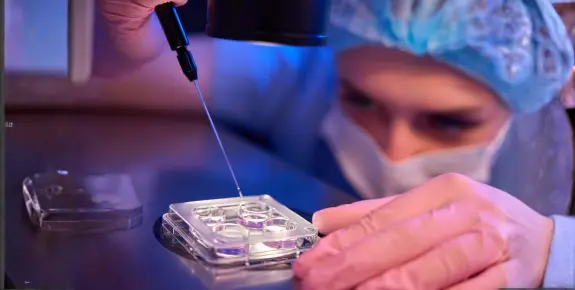
Egg freezing has changed dramatically in the last decade. What was once considered experimental is now considered standard fertility care. The technology — vitrification — has transformed survival rates from marginal to comparable with fresh IVF cycles. And in South Africa, it is available at a fraction of the cost of equivalent treatment in the USA or UK.
Whether you are considering egg freezing as a career or life-stage decision, because of a medical diagnosis, or because you simply want to understand your options, this guide covers everything you need to know.
What Is Egg Freezing?
Egg freezing (oocyte cryopreservation) is the process of stimulating the ovaries to produce multiple eggs, retrieving those eggs under sedation, and preserving them through a flash-freezing technique called vitrification — until they are needed for future use.
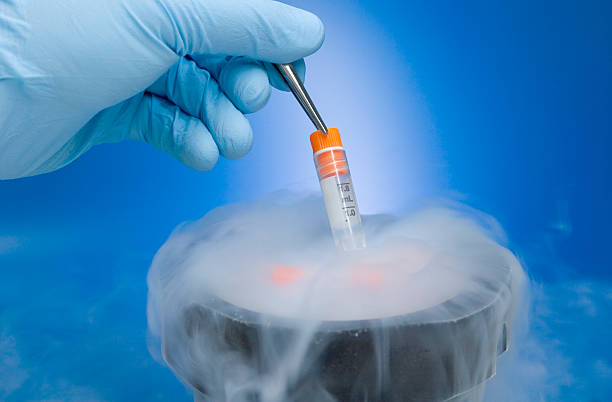
The eggs are stored in liquid nitrogen at -196°C in a suspended state. Unlike embryo freezing (which requires fertilisation), egg freezing preserves unfertilised eggs — giving women the option to decide later who (if anyone) will fertilise them. This makes it particularly relevant for women who are not in a partnership and do not wish to use donor sperm to create embryos in advance.
Vitrification — Why Modern Egg Freezing Works
The key advance that made egg freezing clinically viable is vitrification — ultra-rapid freezing that prevents the formation of ice crystals, which historically damaged eggs during slow-cooling. Vitrification produces a glass-like cell structure that is far more stable than earlier methods.
Studies have shown that fertilisation rates and clinical pregnancy rates from vitrified eggs are comparable to those from fresh eggs in IVF (Fertility and Sterility). The American Society for Reproductive Medicine removed the ‘experimental’ label from egg freezing in 2012. In South Africa, leading clinics including Cape Fertility (which uses the Cryotec vitrification system) and Medfem offer vitrification as the standard approach.
Who Should Consider Egg Freezing?
Elective Egg Freezing (Social Freezing)
- Women in their late 20s or early 30s who are not yet ready to have children but want to preserve their fertility options
- Women whose career, relationship status, or life circumstances make conception impractical now but possible later
- Women who have a strong family history of early menopause or premature ovarian insufficiency
Medical Egg Freezing
- Women diagnosed with cancer who are about to undergo chemotherapy or radiotherapy that could damage ovarian function
- Women facing ovarian surgery that may reduce ovarian reserve
- Women with PCOS, endometriosis, or other conditions that may progressively affect fertility
The Age Question — When Is the Right Time?
The most important variable in egg freezing success is the age at which the eggs are frozen. Egg quality and quantity both decline with age — particularly after 35. The optimal window for egg freezing is generally considered to be between ages 25 and 37, with the strongest evidence supporting freezing before 35.
A 2013 meta-analysis found the probability of a live birth after three egg freezing cycles was 31.5% for women who froze at age 25, declining to 14.8% at age 40. This does not mean egg freezing at 38 is pointless — it means expectations need to be calibrated to the age at freezing.
| The most common regret in egg freezing is not doing it too early — it is waiting too long. |
The Egg Freezing Process in South Africa
Step 1: Consultation and Testing
An initial consultation with a reproductive specialist includes ovarian reserve testing (AMH and antral follicle count) to predict how many eggs are likely to be retrieved. This determines whether egg freezing is clinically appropriate and helps set expectations for yield.
Step 2: Ovarian Stimulation (10–14 days)
Self-administered hormone injections (the same medications as IVF stimulation) are used to stimulate multiple follicles. Regular clinic monitoring (ultrasound and blood tests every 2–3 days) tracks development. Women with PCOS often produce high egg yields but require careful monitoring for OHSS risk.
Step 3: Trigger Injection and Egg Retrieval
When follicles are mature, a trigger injection is given — exactly 36 hours before retrieval. Egg retrieval is a 20–30 minute procedure under sedation, identical to the retrieval phase of an IVF cycle.
Step 4: Vitrification and Storage
Retrieved eggs are assessed by an embryologist. Mature eggs (metaphase II oocytes) are vitrified and stored in liquid nitrogen. Immature eggs cannot be frozen using current standard protocols. The average yield in South Africa varies by age and ovarian reserve — most women freeze 8–15 eggs per cycle, though women with PCOS often freeze significantly more.
Step 5: Future Use
When you are ready to use your eggs, they are thawed (warmed), fertilised with a sperm sample via ICSI, allowed to develop as embryos, and transferred in a frozen embryo transfer cycle. If the eggs are not used, storage can continue indefinitely (subject to annual fees) or they can be discarded or — with your consent — donated to another person.
Egg Freezing Success Rates — What to Expect
Medfem Fertility Clinic provides a useful summary: approximately 4% live birth rate per egg thawed using vitrification. Practically, this means:
- 10 frozen eggs: approximately 40% chance of a live birth from those eggs
- 15 frozen eggs: approximately 60% chance
- 20 frozen eggs: approximately 80% chance
These figures are averages and are significantly influenced by age at freezing. Success rates for women who froze before 35 are substantially higher than averages that include older freezers.
South Africa has no national egg freezing outcomes registry. These figures are consistent with international published data and individual clinic-quoted ranges.
Egg Freezing Cost in South Africa 2025
- Gift of Life Fertility Centre estimate: approximately R33,000 for the procedure, medication, and 5 years of storage
- Breakdown: approximately R18,000–R25,000 for the procedure itself; R8,000–R15,000 for stimulation medication; R2,000–R5,000 for first year of storage
- Annual storage fees thereafter: approximately R2,000–R4,000 per year
- Future frozen embryo transfer cycle (when you use the eggs): approximately R15,000–R25,000
For international comparison: egg freezing in the USA costs approximately USD $14,000 per cycle on average (Freeze.health, 2025). In the UK, approximately £3,300–£3,900 for the procedure. South Africa offers a significant cost advantage for both local and international patients.
Discovery Health’s Assisted Reproductive Therapy Benefit covers portions of the egg freezing procedure (oocyte retrieval and lab tests) for qualifying plan members (freeze.health, 2025).
South Africa as an Egg Freezing Destination for International Patients
South Africa — particularly Cape Town — has emerged as a medical travel destination for egg freezing, particularly for women from the UK, USA, Nigeria, Kenya, and the Middle East. Key factors:
- Cost: significantly lower than home-country pricing
- Liberal legislation: egg freezing is legally unambiguous in South Africa
- Clinic quality: leading SA centres use internationally accredited protocols
- Donor pool: if egg donation is needed, South Africa has one of the largest and most diverse donor pools globally
Women travelling for egg freezing typically need 2–3 weeks in South Africa for the stimulation and retrieval phase.
| KEY TAKEAWAYS |
| ✓ Vitrification (ultra-rapid freezing) has transformed egg freezing — survival and success rates are now comparable to fresh IVF. |
| ✓ The optimal window for egg freezing is before 35 — quality and quantity both decline with age. |
| ✓ Approximately R33,000 covers the procedure, medication, and 5 years of storage at South African prices. |
| ✓ Roughly 4% live birth rate per egg frozen — 15 eggs gives approximately 60% chance of one live birth. |
| ✓ South Africa’s cost advantage and leading clinic quality make it a compelling option for both local and international patients. |
References
- Gift of Life Fertility Centre. Egg and embryo freezing. giftovlife.com
- Cape Fertility (2025). Egg freezing. capefertility.co.za
- Medfem (2025). Egg freezing and storage. medfem.co.za
- Freeze.health (2025). Egg freezing in South Africa.
- ASRM (2012). Mature oocyte cryopreservation: a guideline.
- Wikipedia / Oocyte Cryopreservation (2025). Clinical pregnancy rate data.
Disclaimer: This content is for educational purposes only and does not constitute medical advice. Always consult with a qualified healthcare provider before making decisions about fertility treatment.
About the Author
Leigh-Ann Geydien is the founder of Fertility Solutions, South Africa’s only dedicated fertility directory. With a deep commitment to patient advocacy, she built the platform to bridge the gap between those navigating fertility challenges and the clinics and reproductive health specialists best placed to help them.