Published by Fertility Solutions | World Infertility Awareness Month 2026 | Week 4 of 4
At Fertility Solutions, this is the article we always want people to reach. As we have shared throughout this month’s series — from the one in six South Africans who experience infertility, to the emotional weight that so often accompanies that reality, to the causes and diagnostic pathways that help people understand their own situation — the road is rarely simple. But it does not end at diagnosis. For most people, it is only just beginning.
” Reproductive medicine has advanced more in the last decade than in the previous four decades combined. The future of fertility is genuinely hopeful. “
In Vitro Fertilisation (IVF): The Cornerstone of Assisted Reproduction
IVF remains the most widely used and studied fertility treatment in the world. It involves stimulating the ovaries to produce multiple eggs, retrieving those eggs in a short surgical procedure, fertilising them with sperm in a laboratory, and transferring the resulting embryo (or embryos) into the uterus.
The success rates for IVF have improved dramatically over the past decade. Current data shows that women under 35 can achieve live birth rates of approximately 45–55% per cycle, with cumulative success rates approaching 70% after multiple cycles. These figures decrease with age, but remain meaningful: women aged 38–40 may achieve live birth rates of 20–30% per cycle, while those over 40 using their own eggs may see lower rates — which is where donor egg IVF plays a critically important role.
IVF is not a single procedure — it is a protocol that can be adapted, refined, and personalised. Different stimulation protocols, laboratory techniques, and embryo transfer strategies mean that two people undergoing ‘IVF’ may have quite different experiences.
ICSI: When Sperm Need a Little More Help
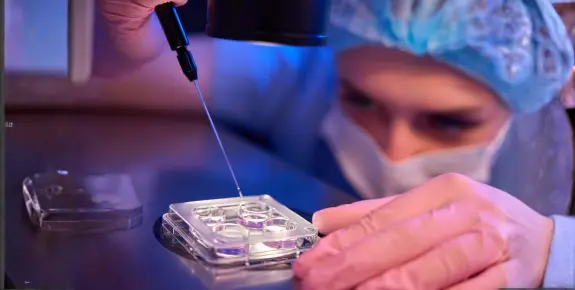
Intracytoplasmic Sperm Injection (ICSI) is a form of IVF in which a single sperm is selected and injected directly into a mature egg, rather than allowing sperm to fertilise eggs naturally in the laboratory dish. It is the gold standard treatment for male factor infertility, including low sperm count, poor motility, and abnormal morphology.
Research published in Nature Medicine in 2024 confirmed ICSI fertilisation rates of 70–80% of injected eggs, with leading laboratories achieving up to 85%. For couples affected by male factor infertility, ICSI has been genuinely transformative — opening the door to biological parenthood for men who, a generation ago, would have had no pathway to it.
Egg Donation: Expanding the Possibilities
For women who are unable to use their own eggs — whether due to diminished ovarian reserve, premature ovarian insufficiency, recurrent IVF failure, genetic conditions, or age-related decline in egg quality — donor egg IVF offers one of the most successful pathways to parenthood in all of reproductive medicine.
Egg donation involves using eggs from a carefully screened donor — typically a younger woman — which are fertilised with the recipient partner’s (or donor) sperm and transferred to the recipient’s uterus. Success rates for donor egg IVF are significantly higher than for IVF using older eggs: clinical pregnancy rates typically range from 50–70% per cycle.
In South Africa, egg donation is legally regulated and ethically governed. Donors undergo rigorous psychological, medical, and genetic screening. Recipients and donors are matched based on physical characteristics, blood type, and other factors as agreed with the clinic.
Sperm Donation
Sperm donation provides a pathway to parenthood for single women, same-sex female couples, and couples where the male partner has azoospermia or severe genetic conditions. Donated sperm is used in intrauterine insemination (IUI) or IVF procedures, depending on clinical circumstances.
Sperm donors in South Africa are screened for infectious diseases, genetic conditions, and general health. As with egg donation, the matching process considers physical characteristics and other relevant factors. Psychological counselling is available and advisable for all parties.
Fertility Preservation: Planning for the Future
Fertility preservation has become one of the fastest-growing areas of reproductive medicine — and for good reason. It offers individuals the ability to store reproductive material now for potential use later, whether due to medical necessity or personal life planning.
| Fertility Preservation Options |
| Egg freezing (oocyte cryopreservation): A woman’s eggs are retrieved and vitrified (flash-frozen) for future use. Modern vitrification achieves egg survival rates after thawing of 90–95%. Approximately 15–20 frozen eggs are typically needed to give a good probability of one live birth. |
| Embryo freezing: Eggs are fertilised before freezing, creating embryos for future use. Slightly higher success rates than egg freezing, as the fertilisation step is already complete. |
| Sperm freezing: Sperm can be frozen prior to chemotherapy, radiation, vasectomy, or simply for future use. Sperm freeze well and retain viability for many years. |
| Ovarian tissue freezing: An emerging technique for women facing cancer treatment who cannot delay chemotherapy for egg retrieval. Still considered experimental in many settings but increasingly successful. |
| Medical necessity: Cancer patients, those facing pelvic surgery, and people with conditions that may affect fertility (such as endometriosis or early POI) may be candidates. |
Preimplantation Genetic Testing (PGT)
PGT allows embryos created through IVF to be genetically screened before transfer, significantly reducing the risk of transferring embryos with chromosomal abnormalities — the most common cause of IVF failure and early miscarriage. For women over 35, those with a history of repeated miscarriage, or couples with known genetic conditions, PGT can substantially improve the probability of a successful outcome.
The Future of Reproductive Medicine
The field of reproductive medicine is advancing at a pace that would have seemed extraordinary even a decade ago. Some of the most promising developments as of 2026 include:
| Emerging Technologies and Research |
| Artificial intelligence in embryo selection: AI systems trained on thousands of embryo images can now predict blastocyst quality and implantation potential with accuracy that matches or exceeds experienced embryologists. |
| In vitro gametogenesis (IVG): Experimental research into creating sperm or eggs from stem cells. Still years from clinical use, but with potentially transformative implications for those with no viable gametes. |
| Advances in sperm retrieval: Microdissection TESE (mTESE) now allows surgeons to retrieve viable sperm from men with non-obstructive azoospermia who previously had no options. |
| Endometrial receptivity analysis (ERA): A biopsy-based test to identify a woman’s personal ‘window of implantation’ for embryo transfer — particularly valuable in cases of repeated implantation failure. |
| Improved vitrification protocols: Further advances in egg and embryo freezing continue to improve survival and success rates for frozen embryo transfers. |
| Personalised ovarian stimulation: Pharmacogenomics is beginning to allow stimulation protocols to be tailored to individual genetic profiles. |
A Word on Hope
At Fertility Solutions, we do not offer hope as an empty reassurance. We offer it as a clinical, evidence-based position. The treatments described in this article are real, available in South Africa, and they work — for many thousands of people every year who are told at some point along the way that their chances are low.
That does not mean everyone’s journey ends in pregnancy. Not every cycle succeeds. Not every treatment pathway leads to a biological child. And honouring the full spectrum of outcomes — including the grief of treatments that do not succeed — is part of telling this story honestly.
But it is also true — factually, statistically, clinically — that the odds are better now than they have ever been. The technology is better. The knowledge is greater. The support available to South Africans navigating this is more accessible than at any point in history.
And that, in every meaningful sense, is hope.
” The technology is better. The knowledge is greater. And the road ahead, for most people, holds more possibility than they yet know. “
Frequently Asked Questions
Q: How does IVF work?
IVF involves four main stages: ovarian stimulation (using hormone injections to encourage multiple egg development), egg retrieval (a short procedure under sedation), fertilisation in the laboratory (where eggs and sperm are combined), and embryo transfer (where one or more embryos are placed in the uterus). Additional steps such as embryo freezing, PGT, and endometrial preparation may be included depending on clinical circumstances.
Q: What is the difference between IVF and ICSI?
In standard IVF, sperm and eggs are placed together in a laboratory dish and fertilisation occurs naturally. In ICSI, a single sperm is selected and injected directly into each egg. ICSI is typically recommended when male factor infertility is present, or when previous IVF cycles have resulted in poor fertilisation.
Q: At what age should I consider freezing my eggs?
The earlier the better, within reason. Egg quality and quantity decline with age, and freezing eggs in your late 20s or early 30s preserves higher-quality eggs than freezing them in your late 30s. That said, egg freezing in the mid-to-late 30s is still a meaningful option for many women.
Q: Is egg donation ethical?
Yes, when conducted within a properly regulated and ethically governed framework. In South Africa, egg donation is legally regulated, donors undergo rigorous medical and psychological screening, and the process is designed to protect the wellbeing of both donors and recipients.
Q: What IVF success rates can I realistically expect?
Success rates vary significantly depending on age, diagnosis, and the clinic. As a general guide: women under 35 can expect live birth rates of approximately 45–55% per IVF cycle; women aged 38–40 may see rates of 20–30%; using donor eggs significantly increases success rates regardless of recipient age.
Closing Message — World Infertility Awareness Month 2026
This is the end of our four-part series for World Infertility Awareness Month 2026 — but it is not the end of the conversation. We began with the numbers: 1 in 6 South Africans, 186 million individuals globally. We moved into the emotional landscape — grief, isolation, relationship pressures. We explored the clinical picture: causes, diagnosis, and when to seek help. And we have ended here, with the treatments and technologies that continue to expand what is possible.
Throughout, our purpose has been the same: to make the people experiencing infertility feel less alone, more informed, and genuinely hopeful. Not because we promise outcomes — we do not. But because we believe, deeply and evidentially, that knowledge is kindness.
If you are on this journey, or supporting someone who is — we see you. We are here.
Read the Full Series
| Week 4 (this article) → World Infertility Awareness Month: Finding Hope — Fertility Treatment Options and the Future of Reproductive Medicine |
Disclaimer: This content is for educational purposes only and does not constitute medical advice. Always consult with a qualified healthcare provider before making decisions about fertility treatment.
About the Author
Leigh-Ann Geydien is the founder of Fertility Solutions, South Africa’s only dedicated fertility directory. With a deep commitment to patient advocacy, she built the platform to bridge the gap between those navigating fertility challenges and the clinics and reproductive health specialists best placed to help them.