
Reproductive Health Month offers an opportunity to reflect on how far reproductive
medicine has evolved. Today, care extends far beyond supporting conception, it empowers
individuals and couples with insights that were unimaginable just a generation ago.
Genetic testing, both before and during pregnancy, is transforming the fertility journey,
helping to identify causes of infertility and monitor the health of pregnancies with greater
confidence and precision.
Trends in Reproductive Health
Over the past decade, genetic testing has shifted from a niche offering to a core
component of modern reproductive care worldwide. Advances in genomic technology
have improved accuracy while also making testing more accessible and cost-effective.
Whether pursuing pregnancy naturally or through assisted reproductive technologies such
as in vitro fertilisation (IVF), individuals now have access to a growing range of genetic
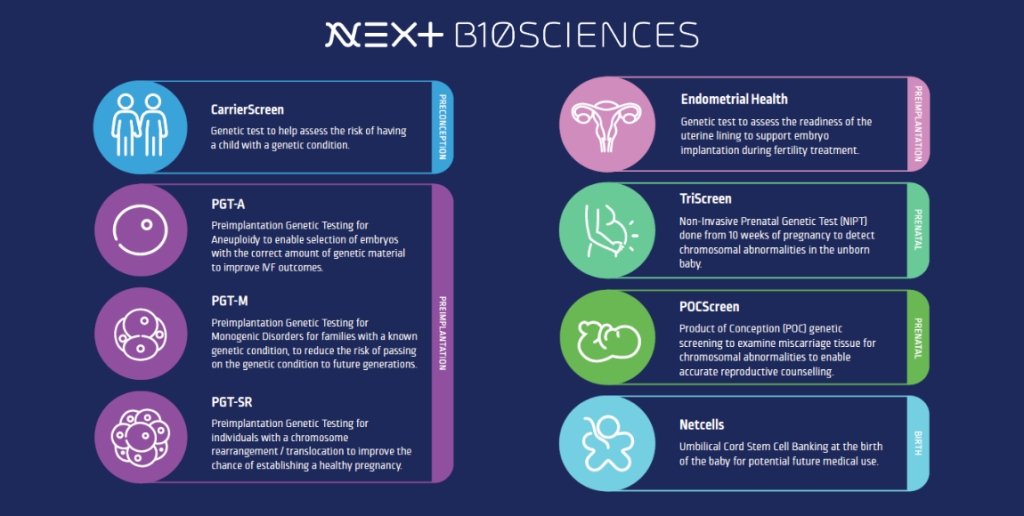
tools. These tools can assist with carrier screening before conception, embryo testing
during fertility treatment, and non-invasive screening during pregnancy – supporting
informed decision-making at every stage of the reproductive journey.
Infertility and the growing demand for support
Infertility affects millions of people globally. According to international health data,
approximately 10-15% of couples experience infertility during their reproductive years.
Several factors contribute to this trend, including rising maternal age, environmental
exposures, lifestyle influences, and underlying chronic health conditions.
As a result, demand for fertility services continues to increase. Treatments such as IVF and
advanced genetic screening are becoming more widely utilised, particularly in high-income
countries, but also increasingly across middle-income regions as awareness and access
expand.
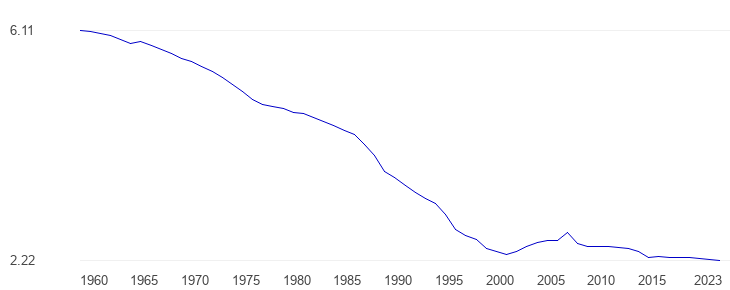
The total fertility rate is an estimate of how many children a woman is likely to have during
her lifetime. Statistics show that, in South Africa, this figure has continued to drop
markedly since 19601.
Genetic testing is now integral to fertility care because it enhances diagnosis and treatment strategies:
- Genetic factors can underlie recurrent pregnancy loss and poor embryo quality.
- Genetic insights inform personalised IVF approaches.
- Testing helps identify carriers of recessive conditions before or during fertility treatment.
- Safer non-invasive prenatal genetic testing provides valuable insights into the unborn baby and supports informed clinical and parental decision-making.
Next Biosciences is a leading biotechnology company in South Africa offering the following genetic testing services locally to assist people in reaching the goal of having a healthy family.
Preconception Carrier Screening
Preconception carrier screening identifies whether individuals carry genes for autosomal recessive or X-linked conditions, enabling informed family planning and reducing the risk of serious genetic disorders. Genetic diseases are the leading cause of infant death in the US, accounting for approximately 20% of infant mortality2. Similarly, South Africa faces a significant genetic disease burden, with Sickle Cell Anaemia prevalent in the African population and Tay-Sachs disease more common in the Ashkenazi Jewish community. Carrier screening empowers reproductive decisions, including assisted reproductive technologies with embryo genetic testing, targeted prenatal screening, donor use, or adoption.
Preimplantation Genetic Testing (PGT)
Embryos created via in vitro fertilisation (IVF) can undergo PGT to detect chromosomal abnormalities or specific genetic conditions before transfer. This improves IVF success
rates and reduces miscarriage risk. Data from the African Network and Registry for Assisted Reproductive Technology (ANARA) indicate rising assisted reproductive technology (ART) activity, with PGT showing effective outcomes and lower multiple pregnancy rates3. Despite its benefits, accessibility to PGT across Africa remains limited. Next Biosciences is uniquely positioned to deliver affordable PGT testing continent-wide.
Products of Conception (POC) Testing
With over 55% of miscarriages occurring without a known cause, POC testing provides critical answers by identifying chromosomal abnormalities that may have led to pregnancy loss. Recurrent pregnancy loss (RPL), defined as two or more losses before 20 week’s gestation, affects 2–5% of couples4. Even after standard evaluations (uterine assessment, endocrine tests, antiphospholipid antibodies, and parental karyotypes), 50–60% of cases remain unexplained. POC testing can identify aneuploidy in more than half of miscarriages, offering closure for patients and guiding future management.
Non-Invasive Prenatal Testing (NIPT)
NIPT is a simple blood test that can detect chromosomal abnormalities and determine fetal sex as early as 10 weeks, without risk to the pregnancy. It provides high sensitivity and specificity for common aneuploidies and reduces the need for invasive procedures, especially benefiting HIV-positive pregnancies. However, in South Africa, uptake is limited due to high costs, complex NGS technology requirements, infrastructure gaps, and shortages of trained genetic counsellors 5. Access is largely confined to privately funded, high-risk pregnancies, exacerbating healthcare inequities. Next Biosciences offers the most comprehensive NIPT portfolio in South Africa at medical aid rates, removing the need to send samples overseas, reducing results turnaround time and expanding access for patients and healthcare providers.
Genetic testing is transforming reproductive healthcare – equipping clinicians and families with the information to make well-informed decisions. Globally, these tools are helping people understand infertility, plan families responsibly, and improve pregnancy outcomes. In South Africa, innovations like those offered by Next Biosciences are increasingly part of the conversation, bringing hope and tangible solutions to families.
World Population Prospects, United Nations ( UN ), publisher: UN Population Division; Statistical databases and publications from national statistical offices, National statistical offices; Demographic Statistics, Eurostat ( ESTAT )
Nazareth SB, Lazarin GA, Goldberg JD. Changing trends in carrier screening for genetic disease in the United States. Prenat Diagn. 2015 Oct;35(10):931-5. doi: 10.1002/pd.4647. Epub 2015 Jul 27. PMID: 26138560; PMCID: PMC4758394.
Dyer S, Potgieter L, Honwana F, Elgindy E, Adageba RK, Khrouf M, et al. Assisted reproductive technology in Africa: the African Network and Registry for ART, 2021 and 2022. Reprod Biomed Online. 2026;52(2):105230. doi:10.1016/j.rbmo.2025.105230.
Genetic testing of products of conception in recurrent pregnancy loss evaluation Dahdouh, Elias M. et al. Reproductive BioMedicine Online, Volume 43, Issue 1, 120 – 126
Labuschagne R, Aldous C, Vorster E, Walters S. Scoping review: the current landscape of NIPT in South Africa. J Community Genet. 2025 Jun;16(3):227-241. doi: 10.1007/s12687-025-00802-6. Epub 2025 May 28. PMID: 40437261; PMCID: PMC12202265.
Disclaimer: This content is for educational purposes only and does not constitute medical advice. Always consult with a qualified healthcare provider before making decisions about fertility treatment.
About the Author
Leigh-Ann Geydien is the founder of Fertility Solutions, South Africa’s only dedicated fertility directory. With a deep commitment to patient advocacy, she built the platform to bridge the gap between those navigating fertility challenges and the clinics and reproductive health specialists best placed to help them.