A Major Shift in Women’s Health — And What It Means for You
If you’ve been diagnosed with polycystic ovary syndrome (PCOS), or you’ve been searching for answers about irregular cycles, ovulation problems, or unexplained fertility challenges, there is something important you need to know: PCOS has officially been renamed.
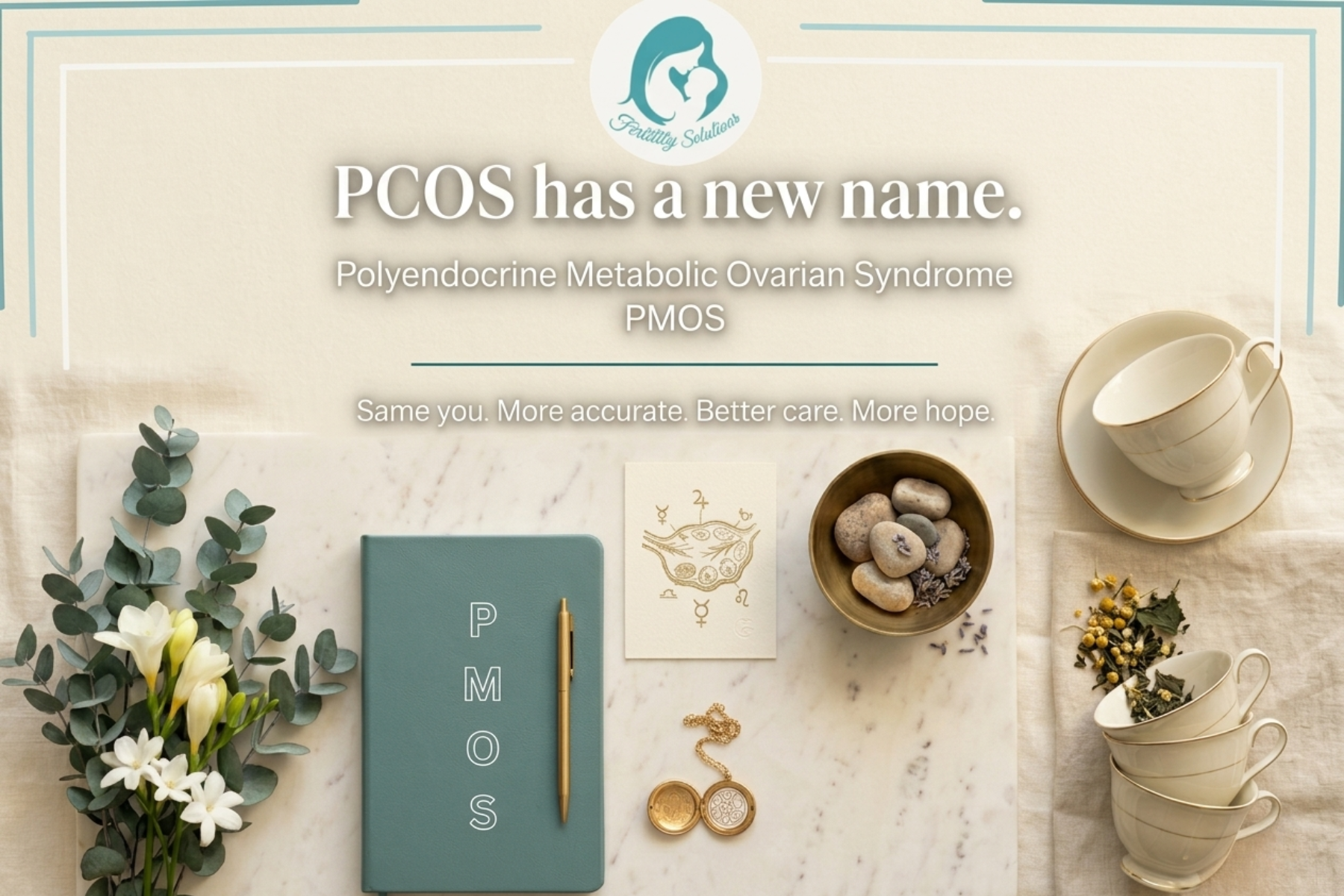
As of May 2026, the condition previously known as polycystic ovary syndrome (PCOS) has been given a new, more accurate name: Polyendocrine Metabolic Ovarian Syndrome, or PMOS.
This is not a minor administrative update. It is the result of one of the largest global medical consensus processes in women’s health history — a years-long effort involving more than 14,000 patients and health professionals across 56 organisations worldwide, published in The Lancet on 12 May 2026.
Here is what this change means, why it matters, and — most importantly — what has NOT changed for women who are trying to conceive.
Your Condition Has NOT Changed. The Understanding of It Has.
The first and most important thing to know: if you were diagnosed with PCOS, you still have the same condition. Your symptoms, your fertility journey, your treatment plan — none of that changes because of a new name.
What HAS changed is that the medical community has finally given the condition a name that accurately reflects what it actually is: a complex, multi-system hormonal and metabolic condition — not simply a problem with ovarian cysts.
Think of it this way: the science didn’t change. The label finally caught up.
What Is PMOS? Breaking Down the New Name
PMOS stands for Polyendocrine Metabolic Ovarian Syndrome. Let’s unpack each word, because every part of this name was chosen deliberately by international experts:
Poly — meaning ‘many’ or ‘multiple’
This signals that the condition involves multiple systems in the body, not just one organ.
Endocrine — relating to hormones and the glands that produce them
PMOS is fundamentally a hormonal condition. It involves disturbances across insulin, androgens (male-type hormones present in all women), and neuroendocrine hormones. The old name, PCOS, completely missed this.
Metabolic — relating to the body’s chemical and energy processes
Insulin resistance, weight management challenges, blood sugar regulation, cholesterol, and cardiovascular risk all form part of PMOS. These are metabolic features — and they are central to understanding the condition.
Ovarian — relating to the ovaries
The ovaries are involved. Ovarian dysfunction, irregular follicle development, elevated AMH, and disrupted ovulation are all real features of PMOS. But the ovaries are one part of a much larger picture.
Syndrome — a recognised collection of symptoms and signs
PMOS is a syndrome, meaning it presents differently in different women. Some women have metabolic features most prominently. Others have hormonal or reproductive symptoms. Most have a combination.
Together, this new name reflects the true nature of the condition: a polyendocrine (multi-hormonal) metabolic syndrome with ovarian involvement.
Why Was the Name PCOS Misleading — And Why Did It Matter?
The term ‘polycystic ovary syndrome’ implied that the defining feature of the condition was the presence of cysts on the ovaries. This was inaccurate in a very important way.
Women with PCOS do not have pathological ovarian cysts. What is actually seen on ultrasound are small, immature follicles — eggs that haven’t fully developed or been released — not cysts in the medical sense of the word.
This distinction sounds technical, but the real-world consequences were significant:
- Up to 70% of women with PCOS/PMOS have historically gone undiagnosed, partly because their symptoms didn’t match what they imagined a ‘polycystic ovary condition’ would look like
- Women without visible follicles on ultrasound were sometimes told they couldn’t have PCOS — even when they had every other symptom
- The name focused entirely on the ovaries, causing doctors, patients, and even researchers to miss the metabolic and hormonal dimensions of the condition
- Women in certain cultural contexts felt stigmatised by a name that seemed to focus entirely on their reproductive organs and fertility
- Research funding, clinical guidelines, and medical education were all shaped by a name that didn’t reflect the full condition
The Lancet paper published in May 2026 confirmed what many experts had been saying for over a decade: the old name was causing real harm — through delayed diagnosis, inadequate treatment, and unnecessary stigma.
The Scale of the Change: A Global Consensus
Renaming a medical condition is not done lightly. This particular process was described by The Lancet as ‘unprecedented’ in its scale and rigour.
Here is what went into it:
- 14,360 responses collected from patients and health professionals in global surveys
- 56 leading academic, clinical, and patient organisations involved
- Participants from all major world regions
- Multiple rounds of Delphi surveys and expert workshops (November 2025 and February 2026)
- Marketing and communication analysis to ensure the new name was appropriate across different cultures and languages
- Co-design with patients, who were central to every stage — not added as an afterthought
The decision to name the condition PMOS was reached in February 2026, and the full Health Policy paper was published in The Lancet on 12 May 2026. A 3-year transition period is now underway globally.
PMOS and Fertility: What Women Trying to Conceive Need to Know
PMOS is one of the most common causes of ovulatory infertility globally. Affecting 1 in 8 women, it is a leading reason why women struggle to conceive — and it is also a condition for which many effective fertility treatments exist.
Understanding how PMOS affects fertility can help you ask better questions, find the right support, and approach your conception journey with clarity.
Ovulation and PMOS
The most direct way PMOS affects fertility is through ovulation. Many women with PMOS experience:
- Irregular ovulation — where eggs are released unpredictably, making timing conception difficult
- Anovulation — where ovulation doesn’t occur at all in certain cycles
- Delayed ovulation — where the body takes longer than average to release an egg
This is caused by the hormonal disruptions at the heart of PMOS. Elevated androgens, insulin resistance, and disrupted LH/FSH ratios all interfere with the normal follicle development and egg release process.
Insulin Resistance and Fertility
Insulin resistance is present in the majority of women with PMOS — including many women of normal weight. When the body doesn’t respond efficiently to insulin, it produces more of it. Excess insulin then stimulates the ovaries to produce more androgens (male-type hormones), which further disrupts ovulation.
Addressing insulin resistance through lifestyle changes, medication (such as metformin), or targeted nutrition can meaningfully improve ovulation and fertility outcomes in women with PMOS.
Egg Quality and AMH
Women with PMOS often have elevated AMH (Anti-Müllerian Hormone) levels, which reflects a larger pool of developing follicles. While this can be a positive sign for ovarian reserve, it also means the normal process of follicle selection and maturation is disrupted.
The good news: with appropriate support — whether through lifestyle, medication, or fertility treatment — many women with PMOS can produce mature, healthy eggs.
Pregnancy Is Possible
This is important: a diagnosis of PMOS does not mean you cannot get pregnant. Many thousands of women with PMOS conceive naturally, and many more do so with appropriate medical support.
Fertility treatments that are commonly used for women with PMOS include:
- Lifestyle optimisation — even a modest improvement in metabolic health can restore ovulation in some women
- Ovulation induction medications — such as letrozole or clomiphene, which stimulate the ovaries to develop and release an egg
- Metformin — an insulin-sensitising medication that can help restore regular ovulation
- Intrauterine insemination (IUI) — where sperm is placed directly into the uterus at the time of ovulation
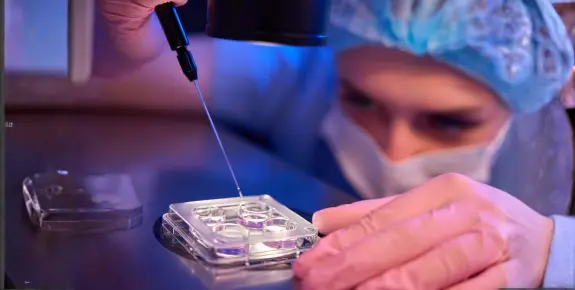
- In vitro fertilisation (IVF) — where eggs are retrieved, fertilised in a laboratory, and the resulting embryo is transferred to the uterus
Working with a fertility specialist who understands PMOS — including its metabolic and hormonal dimensions — is key to finding the right path for you.
Symptoms of PMOS: A Comprehensive Overview
Because PMOS is a multi-system condition, it can present very differently in different women. Some women have many symptoms; others have only a few. The absence of one symptom does not rule out PMOS.
Common symptoms and features include:
- Irregular menstrual cycles — periods that come too infrequently, too frequently, or not at all
- Absent or infrequent ovulation
- Difficulty conceiving
- Elevated androgens — which may show up as acne (particularly on the jaw and chin), excess facial or body hair (hirsutism), or hair thinning on the scalp
- Insulin resistance — which can contribute to weight gain, fatigue, and difficulty losing weight
- Polycystic ovarian morphology on ultrasound — the appearance of multiple small follicles, though this is not always present
- Elevated AMH levels on blood testing
- Metabolic features — including high blood sugar, high cholesterol, or high blood pressure
- Psychological symptoms — anxiety, depression, and reduced quality of life are more common in women with PMOS
- Fatigue and low energy
It is worth noting that PMOS does not always look the same. A woman with PMOS may have regular periods but still not be ovulating. Another may have no acne or excess hair, but have significant insulin resistance. This is one of the reasons why the old name caused so much diagnostic confusion.
How Is PMOS Diagnosed?
The diagnostic criteria for PMOS remain the same as those previously used for PCOS. According to international guidelines, an adult (aged 20 and over) is diagnosed with PMOS when they meet at least two of the following three criteria (after other conditions have been excluded):
- Oligo-anovulation — irregular or absent ovulation, typically reflected in irregular menstrual cycles
- Clinical or biochemical hyperandrogenism — signs of elevated androgens, either on examination (acne, hirsutism, hair loss) or on blood tests
- Polycystic ovarian morphology on ultrasound, or elevated AMH on blood testing
For adolescents, both the first and second criteria must be present for a diagnosis.
If you suspect you have PMOS, the right starting point is a conversation with your GP, gynaecologist, or fertility specialist, who can arrange appropriate blood tests and ultrasound. Early diagnosis makes a meaningful difference to long-term outcomes.
What Happens During the 3-Year Transition Period?
The global transition from PCOS to PMOS terminology will take place over approximately 3 years. During this time:
- Both ‘PCOS’ and ‘PMOS’ will be used in clinical settings — your doctor may continue to use PCOS for some time
- The International Guidelines (used in 195 countries) will be updated to include PMOS terminology at their next revision in 2028
- Medical records, electronic health systems, and disease classification codes (including the ICD) will be updated progressively
- Patient and health professional education resources are being developed in multiple languages
- Research and funding bodies will begin adopting the new terminology
For patients, the most important message is: don’t be alarmed if your doctor still uses ‘PCOS.’ They are talking about the same condition. The terminology is simply evolving.
What Women Previously Diagnosed With PCOS Should Do Now
If you have an existing PCOS diagnosis, here is what we recommend:
- Do not panic — your condition has not changed, only the name
- Continue any ongoing fertility treatment or monitoring
- If you’re trying to conceive, speak to a fertility specialist about your individual situation and treatment options
- Begin familiarising yourself with the term PMOS — it will become the standard over the coming years
- If you haven’t yet been evaluated for the metabolic features of PMOS (insulin resistance, blood sugar, cardiovascular risk), consider discussing this with your doctor
- Seek out a practitioner who understands PMOS holistically — not just as a reproductive condition
Why This Matters for Women in South Africa
In South Africa, as globally, PMOS is one of the most common hormonal conditions in women of reproductive age — yet it remains significantly underdiagnosed and misunderstood.
The name change offers an opportunity to improve awareness and care in the South African context. A better name means better conversations between patients and doctors, better alignment of research and treatment, and reduced stigma for women navigating this condition.
At Fertility Solutions South Africa, we believe that women deserve accurate, compassionate, and up-to-date information about their reproductive health. The shift from PCOS to PMOS is a step in the right direction — and we are committed to helping our patients navigate it with confidence.
Frequently Asked Questions About PMOS
Is PCOS now called PMOS?
Yes. As of May 2026, polycystic ovary syndrome (PCOS) has been officially renamed polyendocrine metabolic ovarian syndrome (PMOS) following a major international consensus process published in The Lancet.
Is PMOS the same condition as PCOS?
Yes, exactly. PMOS and PCOS refer to the same condition. Only the name has changed — the underlying biology, symptoms, and treatments remain the same.
Why was PCOS renamed to PMOS?
The old name was medically inaccurate. Women with PCOS do not actually have pathological ovarian cysts, and the name focused too narrowly on the ovaries, missing the condition’s significant hormonal and metabolic dimensions.
Does PMOS affect fertility?
Yes. PMOS is one of the leading causes of ovulatory infertility. It can disrupt ovulation, affect egg quality, and increase the risk of pregnancy complications. However, pregnancy is possible — and many women with PMOS conceive with appropriate support.
Can you still get pregnant with PMOS?
Absolutely. Many women with PMOS conceive naturally, and others do so with the help of ovulation induction medications, IUI, or IVF. A fertility specialist can help determine the right approach for your individual situation.
Is PMOS curable?
PMOS is a lifelong condition, but its symptoms and health impacts can be managed effectively. Many women experience significant improvement with lifestyle changes, medication, and targeted treatment.
What causes PMOS?
PMOS has polygenic origins — it is influenced by multiple genes — and involves complex interactions between hormones, insulin, metabolism, and the ovaries. It is not caused by any single factor, and it is not the result of anything a woman has done.
Will doctors stop using the term PCOS?
Over time, yes. The transition from PCOS to PMOS will occur over approximately 3 years, with medical guidelines, records, and educational materials updated progressively. In the short term, you may hear both terms used.
What are the symptoms of PMOS?
Symptoms include irregular periods, absent or infrequent ovulation, acne, excess facial or body hair, hair thinning, difficulty conceiving, insulin resistance, fatigue, and metabolic features such as elevated blood sugar or cholesterol.
Should I get a new diagnosis under the name PMOS?
No. If you were diagnosed with PCOS, that diagnosis remains valid. The criteria for diagnosis have not changed — only the name.
Does PMOS affect mental health?
Yes. Research shows that women with PMOS have higher rates of anxiety, depression, and reduced quality of life. This is an important aspect of the condition that deserves attention alongside physical symptoms.
What treatments are available for PMOS-related infertility?
Treatment options include lifestyle optimisation (diet, exercise, weight management where appropriate), ovulation induction medications (letrozole, clomiphene), metformin, IUI, and IVF. The best approach depends on your individual presentation.
Is PMOS more than a fertility condition?
Yes — and this is central to the name change. PMOS affects hormonal health, metabolic health, cardiovascular risk, psychological wellbeing, and skin. It is a multi-system condition that deserves comprehensive care, not just fertility-focused management.
Disclaimer: This content is for educational purposes only and does not constitute medical advice. Always consult with a qualified healthcare provider before making decisions about fertility treatment.
About the Author
Leigh-Ann Geydien is the founder of Fertility Solutions, South Africa’s only dedicated fertility directory. With a deep commitment to patient advocacy, she built the platform to bridge the gap between those navigating fertility challenges and the clinics and reproductive health specialists best placed to help them.