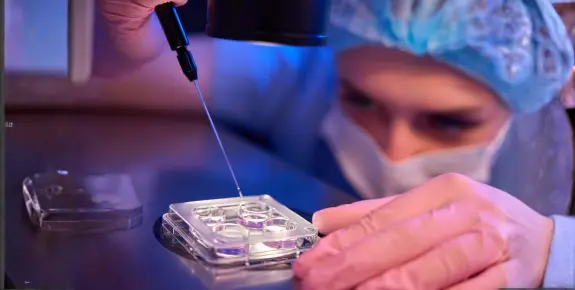
South Africa occupies a genuinely unusual position in the global landscape of egg donation. It has a clear legal framework, a large and ethnically diverse donor pool, internationally accredited clinics, and success rates comparable to the best centres globally — at a fraction of the cost of equivalent treatment in Europe, the United States, or the UAE.
For women who need donor eggs to build their family — whether because of age-related egg quality decline, premature ovarian insufficiency, genetic conditions, or repeated IVF failure — South Africa is one of the most accessible and well-regulated destinations in the world. This guide covers everything. For background on who egg donation is for and what IVF involves, read our complete IVF guide for South Africa first.
Who Is Egg Donation For?
Donor egg IVF is recommended when:
- Own-egg IVF has failed repeatedly — if this applies to you, our guide to what happens after a failed cycle explains the review process
- Ovarian reserve is severely diminished — very low AMH combined with very low AFC, particularly in older women
- Premature ovarian insufficiency (POI) — the ovaries have stopped producing eggs before the expected age of menopause
- Genetic conditions that the intended mother would not want to pass to a child
- Surgical removal of the ovaries
- Age-related egg quality decline — particularly for women in their mid-to-late forties. See our fertility by age guide for context on how age affects own-egg IVF success rates
The critical distinction: donor egg IVF success rates reflect the donor’s age, not the recipient’s. A 45-year-old recipient using eggs from a 24-year-old donor has success rates broadly equivalent to a 24-year-old using her own eggs. The uterus, in most cases, remains fully capable of carrying a pregnancy well into the mid-forties and beyond.
The Legal Framework in South Africa
What the law says
Egg donation in South Africa is governed by the National Health Act (Act 61 of 2003). Key provisions:
- Egg donation is legal and well-regulated in South Africa
- Donation is anonymous by default — SA law does not provide donor-conceived children with the right to identifying information about their donor
- Donors are compensated for time, inconvenience, and discomfort — typically R7,000–R10,000 per donation cycle — not for the eggs themselves
- Donors must be between 18 and 35 years old and may not donate more than six times in total
- All egg donation cycles must be performed at SASREG-accredited centres
- Single women and same-sex couples can receive donor eggs — SA law is non-discriminatory. For international patients, our guide to South Africa as a fertility destination covers the full legal and logistical picture
Why SA’s framework matters for international recipients
Many countries either prohibit egg donation, restrict it severely, or operate in a legal grey area. South Africa’s clear, permissive, and well-enforced framework — combined with a short matching timeline — makes it one of the most reliable destinations globally. Unlike the UK, where waiting times can be 2–3 years, most SA clinics complete the matching process in weeks to a few months.
The Egg Donation Process — Step by Step
Step 1: Recipient workup
Before matching begins, the recipient undergoes a uterine assessment, hormonal baseline, and general health screen. This is typically done at your first fertility consultation or a follow-up appointment.
Step 2: Donor matching
Matching is done through a SASREG-accredited agency or a clinic’s own programme. Recipients receive anonymous donor profiles. South Africa’s donor pool is one of the most ethnically diverse in the world — a significant advantage for recipients from African, Middle Eastern, and South Asian backgrounds. FertilityMate is one of SA’s leading egg donor agencies, listed in the Fertility Solutions directory.
Step 3: Synchronisation and stimulation
The donor undergoes ovarian stimulation (10–14 days of hormone injections) and egg retrieval. The recipient prepares her uterine lining with oestrogen and progesterone. Frozen donor egg banks are increasingly available in South Africa, removing the synchronisation requirement entirely.
Step 4: Fertilisation and culture
Retrieved donor eggs are fertilised with the partner’s or donor sperm using ICSI. Embryo development is monitored over 5–6 days. Chromosomally normal embryos may be selected using PGT-A testing (Next Biosciences) if appropriate.
Step 5: Embryo transfer
One embryo is typically transferred to the recipient’s uterus. Any additional viable embryos are frozen. The two-week wait follows.
Success Rates
Donor egg IVF success rates in South Africa are among the best available globally:
| Recipient Age | Live Birth Rate per Transfer (Donor Eggs) |
| Under 40 | 55–65% |
| 40–44 | 50–65% |
| 45–49 | 45–60% |
| 50+ | Assessed individually — uterine function is key |
These rates reflect that success is driven primarily by donor egg quality (which reflects the donor’s age) and uterine receptivity (which is generally well-preserved). At SASREG-accredited clinics with experienced embryology teams, these rates are consistently achievable.
What Does Egg Donation Cost in South Africa?
| Component | Estimated Cost (ZAR) |
| Recipient workup and consultation | R3,000–R6,000 |
| Donor matching fee (agency) | R5,000–R10,000 |
| Donor compensation | R7,000–R10,000 |
| Donor stimulation medication | R15,000–R25,000 |
| IVF laboratory fees (ICSI, culture, transfer) | R30,000–R55,000 |
| Recipient medication (lining preparation) | R3,000–R6,000 |
| Embryo freezing (if applicable) | R5,000–R10,000 |
| Total estimated per fresh cycle | R65,000–R110,000 |
| Frozen donor egg cycle (where available) | R50,000–R85,000 |
For international recipients, travel and accommodation must be added — a Cape Town egg donation cycle typically requires approximately 2–3 weeks in-country. For full cost context, read our IVF cost guide for South Africa. For medical aid coverage questions, see our medical aid fertility coverage guide. Fertility Solutions also offers finance options for those who need to spread treatment costs.
The Emotional Landscape of Egg Donation
Grief for the genetic connection
Many recipients experience a period of grief for the genetic child they had hoped for. This is entirely valid and does not mean egg donation is the wrong choice. The grief and the decision can coexist — and for most recipients, it resolves with time and support.
Questions about disclosure
The research consistently shows that early, age-appropriate disclosure is associated with better outcomes for donor-conceived children. Many fertility counsellors and psychologists specialise in supporting this conversation.
Bonding during pregnancy
Research on epigenetics suggests that the recipient’s uterine environment genuinely influences the developing child — beyond genetics, pregnancy itself is a biological connection. Many recipient mothers describe bonding during and after pregnancy as natural and complete.
Psychological support
SASREG guidelines recommend that all egg donation recipients have access to psychological counselling before and during treatment. If you’d like support navigating this decision, a fertility concierge can help you access appropriate specialist counselling and guide you through the process.
Myths vs Facts
Myth: The child won’t be biologically mine.
Fact: The child will carry donor genetics, but the recipient’s pregnancy profoundly influences fetal development — epigenetic influences during gestation are real. The child is biologically connected to the recipient through pregnancy, even without a genetic connection.
Myth: Egg donation is only for older women.
Fact: While age is the most common indication, egg donation is appropriate for any woman whose own eggs cannot produce a viable pregnancy — including women in their twenties and thirties with premature ovarian insufficiency or repeated IVF failure.
Myth: Frozen donor eggs don’t work as well as fresh.
Fact: At experienced centres using vitrification technology, frozen donor egg success rates are now broadly comparable to fresh cycles. Frozen eggs offer significant logistical advantages.
Myth: SA egg donation is less regulated than Europe.
Fact: The opposite is often true. South Africa’s legal framework is clear, enforced, and SASREG-monitored. Many European countries have far stricter restrictions or chronic donor shortages.
People Also Ask
Q: Is egg donation legal in South Africa?
A: Yes. Egg donation is legal and regulated under the National Health Act (Act 61 of 2003). It must be performed at SASREG-accredited centres. Donors are compensated for time and inconvenience, not for the eggs themselves.
Q: How long does the egg donation process take in South Africa?
A: From recipient workup to embryo transfer, a fresh egg donation cycle typically takes 6–12 weeks including the matching process. For international recipients, an in-country stay of approximately 2–3 weeks is typically required.
Q: Can single women and same-sex couples use egg donation in South Africa?
A: Yes. South African law is non-discriminatory — egg donation is available to single women, married couples, and same-sex couples. Donor sperm can be used alongside donated eggs.
Q: What are the success rates of egg donation IVF in South Africa?
A: At SASREG-accredited clinics, live birth rates per transfer with donor eggs are typically 50–65%. Success rates are broadly consistent regardless of recipient age, as the uterus remains receptive well into the mid-forties.
Q: How much does egg donation cost in South Africa vs the UK or USA?
A: A complete cycle in South Africa costs approximately R65,000–R110,000 (USD $4,000–$7,000). Comparable treatment in the USA costs $25,000–$50,000+. Even including flights and accommodation, South Africa is significantly more affordable.
Practical Takeaways
- Egg donation in South Africa is legal, regulated, well-resourced, and internationally competitive — see why South Africa is a top fertility destination
- SA’s ethnically diverse donor pool is a significant advantage for recipients from African, Middle Eastern, and South Asian backgrounds
- Success rates with donor eggs reflect the donor’s age — recipients in their forties can expect rates comparable to much younger women using their own eggs
- The emotional dimensions of this decision are real and deserve proper support — psychological counselling is available and recommended
- For clinic options, see how to choose a fertility clinic in South Africa or browse the Fertility Solutions clinic directory
→ Read more: FertilityMate — South Africa’s leading egg donor agency
Disclaimer: This article is for educational purposes only and does not constitute medical or legal advice. Egg donation regulations may change — always verify current requirements with a SASREG-accredited clinic. Always consult with a qualified healthcare provider before making decisions about fertility treatment.
About the Author
Leigh-Ann Geydien is the founder of Fertility Solutions, South Africa’s only dedicated fertility directory. With a deep commitment to patient advocacy, she built the platform to bridge the gap between those navigating fertility challenges and the clinics and reproductive health specialists best placed to help them.