
If you or your partner has been diagnosed with male factor infertility, or if a previous IVF cycle resulted in poor or failed fertilisation, your fertility specialist has likely mentioned ICSI. It’s one of the most important developments in reproductive medicine of the last 30 years — and it has made biological parenthood possible for millions of men who would otherwise have had no path forward.
This article explains exactly what ICSI is, when it is recommended, how it differs from standard IVF, what to expect, and what the success rates look like.
What Does ICSI Stand For?
ICSI stands for Intracytoplasmic Sperm Injection. In simple terms, it means injecting a single sperm directly into an egg.
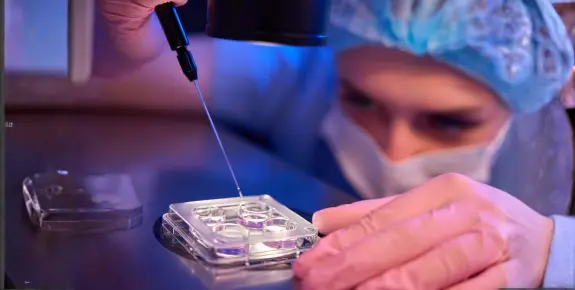
In conventional IVF, eggs and a prepared sperm sample are placed together in a laboratory dish and fertilisation happens naturally — the sperm finds and penetrates the egg on its own. ICSI bypasses this process entirely. An embryologist selects a single sperm under high magnification, immobilises it, and injects it directly into the centre (cytoplasm) of a mature egg using an extremely fine glass needle.
The result — if fertilisation is successful — is an embryo that can then be cultured and transferred to the uterus in exactly the same way as a standard IVF embryo.
Why Was ICSI Developed?
Before ICSI, men with severely low sperm counts, very poor sperm motility, or abnormal sperm morphology had essentially no chance of biological parenthood through IVF. Standard IVF requires enough healthy sperm to compete for access to an egg — something not possible when sperm parameters are severely impaired.
ICSI was first used successfully in 1992, and its introduction transformed male infertility treatment. Today it is one of the most commonly performed procedures in fertility clinics worldwide — in many centres, it is used in the majority of IVF cycles.
When Is ICSI Recommended?
ICSI is not required for everyone undergoing IVF. Your specialist will recommend it in the following situations:
Male factor infertility
- Low sperm count (oligospermia) — fewer than 15 million sperm per millilitre
- Very poor sperm motility (asthenospermia) — fewer than 32% of sperm showing forward movement
- Abnormal sperm morphology (teratospermia) — fewer than 4% of sperm with normal shape
- Severe combined male infertility affecting count, motility, and morphology simultaneously
Surgically retrieved sperm
- When sperm cannot be ejaculated and must be retrieved surgically from the epididymis (PESA) or testicular tissue (TESA/TESE)
- Men who have had a vasectomy or vasectomy reversal
Previous IVF failure
- When a previous IVF cycle had unexpectedly low fertilisation rates
- When there was total fertilisation failure (no eggs fertilised) in a previous cycle
Genetic testing
- When embryos will undergo preimplantation genetic testing (PGT-A), ICSI is preferred to minimise contamination from residual sperm on the egg’s outer surface
Frozen eggs
- The vitrification process can alter the egg’s outer coating, making natural fertilisation less reliable — ICSI is therefore recommended with frozen eggs
Unexplained infertility
- In some cases of unexplained infertility, ICSI is performed as a precaution to maximise fertilisation rates
How Does ICSI Work? Step by Step
1. Egg retrieval
ICSI is performed as part of an IVF cycle. The female partner undergoes ovarian stimulation and egg retrieval in exactly the same way as standard IVF.
2. Sperm preparation
The sperm sample is processed in the laboratory. The embryologist washes and prepares the sample to isolate the healthiest sperm. In surgical retrieval cases, sperm may be obtained on the day of egg collection or from a previously frozen sample.
3. Selecting the sperm
Under a powerful microscope — at magnification of 200 to 400 times — the embryologist examines individual sperm and selects those with the best morphology and movement. This is a skilled, painstaking process.
4. The injection
The mature egg is held steady with a fine holding pipette. The selected sperm is immobilised and drawn into an injection needle finer than a human hair. The needle is carefully guided through the egg’s outer coating and into the cytoplasm, where the sperm is deposited.
The entire procedure is performed on multiple eggs in sequence. In a typical cycle, 8–15 eggs may be injected.
5. Checking for fertilisation
The following morning, the embryologist checks each injected egg for signs of fertilisation — two pronuclei visible under the microscope confirm that fertilisation has occurred. Successfully fertilised eggs continue to develop in the incubator over the next 3 to 5 days.
6. Embryo transfer
The process from here is identical to standard IVF: the best embryo is selected for transfer to the uterus, and any viable surplus embryos are frozen for future use.
ICSI vs. Conventional IVF: What Is the Difference?
- In conventional IVF: eggs and thousands of sperm are placed together; natural selection determines fertilisation
- In ICSI: one sperm is deliberately selected and injected into one egg; the embryologist’s skill is the determining factor
- ICSI does not require any additional stimulation, egg retrieval, or transfer procedures — only the fertilisation method differs
- ICSI adds a laboratory cost and requires additional embryologist time
- ICSI is not necessary when sperm parameters are normal and previous fertilisation has been successful
ICSI Success Rates
ICSI fertilisation rates — the percentage of injected eggs that fertilise successfully — are generally around 70 to 80%.
However, fertilisation rate is not the same as pregnancy rate. Pregnancy and live birth rates from ICSI cycles depend on the same factors as conventional IVF: primarily the age of the egg and the quality of the embryo.
When ICSI is used appropriately, pregnancy rates are comparable to conventional IVF in couples without significant sperm issues. In couples where male factor infertility is the primary diagnosis, ICSI dramatically improves the chance of fertilisation compared to conventional IVF.
What this means for you: With ICSI, nearly every man — regardless of how low his sperm count is — has the possibility of having a biological child, provided at least some sperm can be found. Even men with no sperm in the ejaculate may have sperm retrievable from the testes.
Are There Any Risks to ICSI?
ICSI is an established and safe procedure. As with any medical intervention, there are some considerations to be aware of:
Egg damage
There is a small risk (less than 5%) that an egg will be damaged during the injection process and cannot be used. This risk is lower with highly skilled embryologists and modern equipment.
Fertilisation failure
ICSI does not guarantee fertilisation — in rare cases, despite successful injection, fertilisation may not occur. This is more likely when there are both sperm and egg quality issues.
Genetic considerations
Some genetic causes of severe male infertility may be passed to male children born through ICSI. Where a genetic cause of infertility is identified, genetic counselling is recommended before treatment.
No increased risk of birth defects
Large-scale studies have consistently shown that ICSI babies have no significant increase in birth defects compared to naturally conceived babies. Any slight statistical association that has been observed appears to be related to the underlying cause of infertility, not the ICSI procedure itself.
How Much Does ICSI Cost in South Africa?
ICSI is charged as an additional laboratory procedure on top of the base IVF cost. In South Africa, this additional cost typically ranges from R5,000 to R12,000, depending on the clinic.
Some clinics include ICSI as standard in their IVF pricing — always ask whether it is included or separate when comparing quotes.
Frequently Asked Questions About ICSI
Is ICSI better than IVF?
ICSI is not universally better than conventional IVF — it is a specific tool for specific situations. For couples with normal sperm parameters and good previous fertilisation, standard IVF is equally effective and less costly. ICSI is the right choice when sperm parameters are impaired or when previous conventional fertilisation has not worked.
Can ICSI be done with frozen sperm?
Yes. ICSI is routinely performed using frozen sperm — whether from a previously frozen sample, a sperm donor, or sperm retrieved surgically and frozen for later use.
Does my partner need to be present for ICSI?
The sperm sample is usually produced on the same day as egg collection. In cases where surgical retrieval is planned, your specialist will guide you on timing. In some cases, a previously frozen sample may be used, eliminating the need for same-day production.
Is ICSI covered by medical aid?
In most cases, ICSI is not covered by medical aids unless an ART benefit is available (Discovery Health). It is charged as an additional laboratory procedure.
Next Steps
If male factor infertility has been identified, or if you have been recommended ICSI after a previous IVF cycle, speaking to a fertility specialist is the essential next step.
Fertility Solutions connects South Africans with specialist reproductive medicine practitioners who can assess your specific situation and recommend the most appropriate treatment approach.
Disclaimer: This content is for educational purposes only and does not constitute medical advice. Always consult with a qualified healthcare provider before making decisions about fertility treatment.
About the Author
Leigh-Ann Geydien is the founder of Fertility Solutions, South Africa’s only dedicated fertility directory. With a deep commitment to patient advocacy, she built the platform to bridge the gap between those navigating fertility challenges and the clinics and reproductive health specialists best placed to help them.