The Normalisation Has Outrun the Nuance
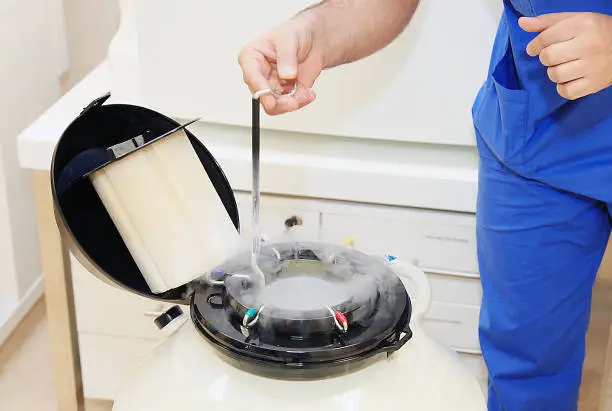
A decade ago, elective oocyte cryopreservation was classified as experimental by the American Society for Reproductive Medicine. In 2012, ASRM lifted that experimental label for oncological indications. The technology, once reserved for patients facing cancer treatment, has since entered the mainstream — marketed as a tool for reproductive autonomy, promoted by employers as a progressive benefit, and accessed by a growing number of women who want to give themselves more time. The science behind vitrification is genuinely good. Post-thaw oocyte survival rates have improved dramatically. The technology works. The problem is the gap between what the technology can do and what many patients believe it will do — and the degree to which clinical consultation is bridging that gap honestly.
What the Data Actually Shows
Cumulative live birth rates from frozen oocytes are highly dependent on: age at freezing, the number of eggs retrieved and stored, the laboratory quality of the treating centre, and the circumstances of subsequent frozen embryo transfer cycles. Research consistently shows that younger patients — those freezing before 35 — have meaningfully better outcomes than those freezing in their late thirties. The probability of a live birth from a single egg freezing cycle for a woman at 38 or older is, at most centres, substantially lower than many patients expect when they arrive for a consultation. A large retrospective analysis of outcomes from multiple European ART centres published in 2023 reinforced what has been known for some time: that for women in their late thirties, achieving a reasonable statistical likelihood of a live birth from frozen eggs typically requires more eggs than a single stimulation cycle will produce for most patients. Multiple cycles, significant cost, and no guarantee — this is the reality that informed consent must convey.
The Consent Conversation
Informed consent in egg freezing should not be a process designed to move a patient efficiently toward a booking. It should be a genuine, evidence-based conversation that addresses success rates at the patient’s specific age, the likely number of eggs needed, the cost implications of multiple cycles, the physical
demands of stimulation and retrieval, and the realistic probability that the eggs may never be needed — or that if they are needed, they may not produce a live birth. ESHRE’s guidelines on fertility preservation are explicit about the importance of individualised counselling that covers both the realistic potential and the limitations of the technology. That standard deserves consistent application, not selective emphasis of the positive.
Medical Preservation Is Different
It is important, in this conversation, to distinguish clearly between elective social egg freezing and medical fertility preservation — for patients facing chemotherapy, pelvic radiotherapy, surgical interventions that may compromise ovarian function, or diagnoses such as premature ovarian insufficiency. For medical fertility preservation patients, the urgency, the clinical context, and the risk-benefit calculation are fundamentally different. These patients may have very limited time and no realistic alternative. The support they need — clinical, logistical, and psychological — is distinct, and the fertility industry’s responsibility toward them is correspondingly significant.
An Honest Appraisal Is an Act of Respect
There is nothing wrong with egg freezing as a choice. For the right patient, at the right age, with realistic expectations and genuine access to quality care, it offers meaningful reproductive optionality. What is not acceptable is a consultation experience that sells hope without selling honesty. Patients who make significant financial and physical investments based on incomplete information — and who later discover that the eggs they froze are unlikely to produce a pregnancy — have been failed by the system that should have served them.
How are you navigating the informed consent conversation around egg freezing in your practice? What do you find most difficult to communicate, and how do you approach it?