
Infertility is still too often framed as a woman’s problem. It is not. Male factor infertility accounts for approximately 40% of South African couples struggling to conceive, according to data from Wijnland Fertility (2024). When combined cases are included — where both partners contribute to the difficulty — the male factor is involved in the majority of infertility presentations.
This guide is for men who are navigating this, and for their partners. It covers what male infertility is, what causes it, what testing looks like, what treatment options exist, and — importantly — what the emotional experience is like for men in South Africa’s specific cultural context.
The Scale of the Problem — and the Silence Around It
Male infertility is globally common and trending in a concerning direction. A systematic review tracking 50 years of data found a 73% decline in sperm concentration among African men overall between 1965 and 2015. A South African and Nigerian study found significant declining trends in normal sperm morphology (55% decline in SA) and progressive motility between 2010 and 2019 (PMC, 2023).
Despite these statistics, male infertility remains underdiagnosed and underdiscussed — particularly in South Africa, where cultural attitudes toward masculinity create barriers to seeking help. A commentary in Nature Reviews Urology (2018) by South African specialists notes that cultural beliefs represent a significant obstacle for men seeking fertility care in this country.
| Male infertility is biological. It is not a reflection of masculinity, sexual function, or personal failure. And it is not something men have to navigate alone or in silence. |
Causes of Male Infertility
Testicular Causes (Most Common)
- Varicocele: dilated veins in the scrotum that increase testicular temperature, impairing sperm production. One of the most common and treatable causes of male infertility — present in approximately 40% of men investigated for infertility
- Hormonal disruption: from the hypothalamic-pituitary-gonadal axis
- Undescended testicle (cryptorchidism): if untreated in childhood, affects sperm production in adulthood
- Genetic conditions: Klinefelter’s syndrome (47,XXY) is one of the main causes of azoospermia
- Infections: sexually transmitted infections, orchitis, or untreated infections affecting the reproductive tract
- Chemotherapy or radiotherapy
Lifestyle and Environmental Factors
- Smoking: associated with reduced sperm count, motility, and morphology
- Alcohol: associated with hormonal disruption and reduced sperm quality
- Heat exposure: laptop use on the lap, hot baths, tight underwear — the testes operate best below body temperature
- Obesity: associated with hormonal disruption and reduced sperm parameters
- Environmental toxins: pesticides, heavy metals, and industrial chemicals
- Anabolic steroids: cause significant hormonal disruption and often render men temporarily or permanently azoospermic
Post-Testicular Causes
- Obstruction: blockage in the vas deferens or epididymis (congenital or post-infection)
- Ejaculatory dysfunction: including retrograde ejaculation
- Vasectomy
Treatment Options for Male Infertility
Lifestyle Modification
Quitting smoking, reducing alcohol, maintaining a healthy weight, avoiding heat exposure, and addressing nutritional deficiencies (zinc, folate, vitamin D) can meaningfully improve sperm parameters over the 70-90 day sperm production cycle. Results are seen after 3 months minimum.
IUI with Partner’s Sperm
For mild male factor infertility (slightly reduced count or motility), IUI with a prepared sperm sample is a first-line option. Sperm washing concentrates the best-performing sperm and places them directly into the uterus, bypassing the cervical barrier.
IVF with ICSI
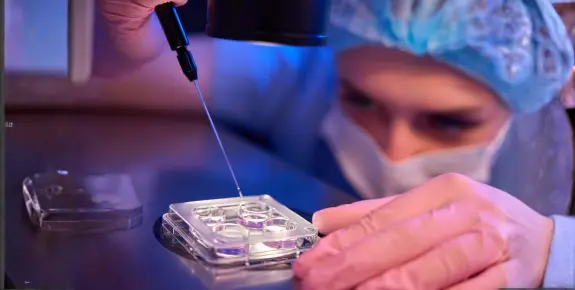
ICSI (intracytoplasmic sperm injection) has transformed the treatment of male factor infertility. A single sperm is injected directly into each egg — making natural fertilisation unnecessary. ICSI can achieve fertilisation even with severely abnormal sperm parameters. For azoospermic men, surgically retrieved sperm (TESE) can be used with ICSI with success rates comparable to ejaculated sperm in appropriate cases.
ICSI is routinely used in South African fertility clinics for male factor infertility and is typically included in or offered alongside standard IVF.
Donor Sperm
Where male factor infertility is untreatable or the male partner chooses not to pursue surgical options, donor sperm offers a path to parenthood. This is a significant decision with emotional complexity — for both partners, and particularly for the man. South Africa has a regulated sperm donor framework. Donor sperm in SA costs approximately R4,320–R7,850 (Fertilityclinicsabroad.com, 2025).
The Emotional Experience of Male Infertility in South Africa
Research published in Nature Reviews Urology (2018) by South African fertility specialists identifies cultural beliefs as a particular obstacle for men in this country. In many communities, infertility in a man is associated with diminished masculinity — regardless of the clinical reality that it is a biological condition.
Many South African men with infertility diagnoses do not disclose this even to close family or friends. Research on male infertility in Africa finds high rates of depression and anxiety that are experienced in isolation, without the community support systems that women tend to access. Partners often experience this too — watching someone they love carry something in silence while the treatment focus remains almost exclusively on the woman’s body.
This isolation is not inevitable. Support from a fertility navigator who understands the SA cultural context, access to peer support from men who have been through this, and a clinical team that treats male infertility as a full partner in the treatment plan rather than an afterthought — these things make a difference.
→ The emotional impact of infertility for men
→ Semen analysis: what your results mean
| KEY TAKEAWAYS |
| ✓ Male factor infertility accounts for approximately 40% of SA fertility cases — it is equally common as female factor. |
| ✓ Semen analysis is quick, inexpensive, and is the essential first investigation for any couple struggling to conceive. |
| ✓ Sperm DNA fragmentation is not measured by standard semen analysis — ask about this test if standard results are unexpectedly normal. |
| ✓ ICSI has transformed male factor treatment — even severe cases can often be addressed with appropriate ART. |
| ✓ The emotional experience of male infertility in SA is significant and frequently silent — expert support matters. |
References
- Wijnland Fertility (2024). Male infertility.
- PMC (2023). Trends in semen parameters of infertile men in South Africa and Nigeria. Sci Rep.
- Nature Reviews Urology (2018). The challenges of supporting male infertility treatment in South Africa.
- Muteshi et al. (2025). Approach to evaluation and management of male infertility in Sub-Saharan Africa. Int J Gynecol Obstet.
- WHO (2021). WHO laboratory manual for the examination and processing of human semen, 6th ed.
Disclaimer: This content is for educational purposes only and does not constitute medical advice. Always consult with a qualified healthcare provider before making decisions about fertility treatment.
About the Author
Leigh-Ann Geydien is the founder of Fertility Solutions, South Africa’s only dedicated fertility directory. With a deep commitment to patient advocacy, she built the platform to bridge the gap between those navigating fertility challenges and the clinics and reproductive health specialists best placed to help them.