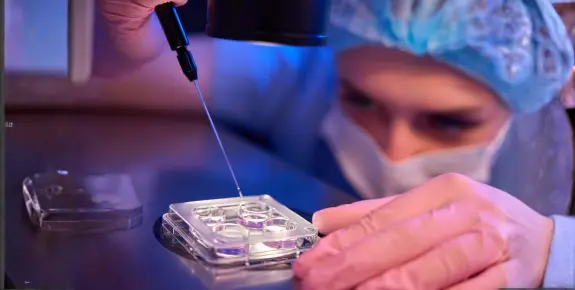
Most South African fertility discussions center on the private sector with costs ranging from R45,000 to R120,000. However, IVF is accessible through the public sector at substantially reduced rates, though this option remains poorly publicized.
The Public Sector Option: What Exists
Four academic hospitals provide IVF and assisted reproductive technology in South Africa’s public system:
- Groote Schuur Hospital — Observatory, Cape Town (UCT-affiliated)
- Tygerberg Hospital — Bellville, Cape Town (Stellenbosch University-affiliated)
- Steve Biko Academic Hospital — Arcadia, Pretoria (University of Pretoria-affiliated)
- Universitas Hospital — Bloemfontein (Free State)
“These hospitals are not well-known as fertility treatment centres. Many GPs and gynaecologists do not routinely refer patients there.”
Cost Breakdown
Procedure costs at Groote Schuur and Tygerberg: approximately R6,700 per cycle at subsidy rate
Medications: NOT covered by public sector. Patients self-fund stimulation medications at approximately R8,000–R15,000 per cycle.
Total estimated cost: R15,000–R22,000 per cycle (including self-funded medications), compared to R45,000–R120,000 privately.
Critical consideration: “You will still need to fund your own stimulation medications — which can be as expensive as the procedure itself.”
The Gap in Service Provision
Research indicates South Africa should provide approximately 90,000 ART cycles annually based on global benchmarks. Actual cycles reported to the national registry represent a fraction of this need. The three main public hospitals combined perform fewer than 500 cycles annually.
Only “approximately 10–13% of the calculated need for medically assisted reproduction in SA is being met.”
How to Access Public Sector Treatment
Step 1: Obtain a referral through your GP or government district hospital to a government hospital gynaecologist.
Step 2: Complete initial assessment and full infertility workup at the academic hospital’s reproductive medicine unit.
Step 3: Meet clinical qualification criteria (diagnosis confirmation, age parameters, income means-testing).
Step 4: Navigate waiting lists — measured in years rather than months. No nationally published average exists; contact individual hospitals directly.
Significant Limitations
- Waiting periods of 1–3+ years (critical barrier for women over 35)
- Self-funded medications required
- Extended referral pathway before first appointment
- Limited cycle availability per patient
- Egg donation and surrogacy typically unavailable
- Geographic limitation to Cape Town, Pretoria, and Bloemfontein only
- Limited provincial coverage across South Africa
Who Should Consider This Route
The public sector pathway suits:
- Younger couples (under 35) with time flexibility
- Couples with clear diagnoses responding to standard IVF
- Those without medical aid or private sector financial capacity
- Residents in Western Cape, Gauteng or the Free State where units operate
Emerging Development: The Walking Egg
Steve Biko Academic Hospital collaborates with the University of Pretoria and Belgian organisation The Walking Egg on a mobile IVF laboratory project using simplified, low-cost culture systems. This was a research initiative as of last review — its current stage could not be independently reconfirmed, so treat it as a longer-term development to watch rather than a currently available service.
Key Takeaways
✓ Four public hospitals offer subsidised IVF with procedure costs around R6,700
✓ Medications (R8,000–R15,000) require patient funding
✓ Total public cost approximately R15,000–R22,000 versus R45,000–R120,000 private
✓ Waiting lists of 1–3+ years represent the primary barrier
✓ Only approximately 10% of South Africa’s ART need is currently met
Disclaimer
“This content is for educational purposes only and does not constitute medical advice. Always consult with a qualified healthcare provider before making decisions about fertility treatment.”
About the Author
Leigh-Ann Geydien founded Fertility Solutions, South Africa’s dedicated fertility directory, to bridge gaps between patients and reproductive health specialists.