If you have consulted a sangoma or inyanga about your fertility — or if you are considering it — this article is for you. And it approaches the subject the way Fertility Solutions approaches everything: with respect for what you believe, honesty about what the evidence shows, and practical guidance for keeping yourself safe.
Traditional healing is not a backward alternative to modern medicine. For millions of South Africans, it is the primary way they understand illness — not just physically, but spiritually and socially. Between 60 and 80% of South Africans consult traditional health practitioners (THPs) alongside the biomedical system. For fertility specifically — where questions of meaning, ancestors, and spiritual alignment often feel as real as hormone levels — this number is likely higher.
This guide is not here to tell you to stop. It is here to help you use both systems wisely.
Understanding Traditional Healing in a South African Context
South African traditional healing is not a single, uniform system. It encompasses several distinct roles and traditions:
Isangoma (Diviner)
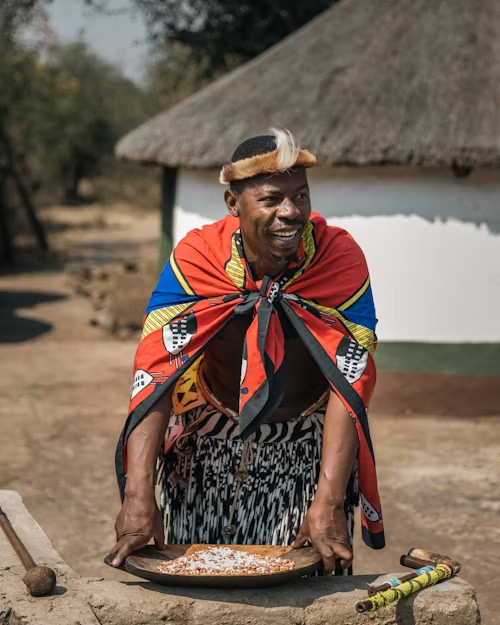
A sangoma works primarily through divination — consulting ancestors through ritual, dream interpretation, bones, or spirit possession to identify the spiritual causes of illness or difficulty. In many South African communities, infertility is understood within a spiritual framework: it may be seen as a disruption of ancestral connection, a consequence of broken taboos, or the result of sorcery or envy from others. A sangoma’s role is to identify these causes and prescribe spiritual interventions — rituals, ceremonies, animal sacrifice, cleansing.
Inyanga (Herbalist)
An inyanga works primarily with plant and animal medicines — preparing remedies aimed at addressing the physical and spiritual aspects of illness. Inyangas may prescribe medicinal preparations (muti) for fertility, including herbs intended to regulate cycles, stimulate ovulation, or ‘prepare’ the womb for conception.
Umthandazi (Faith Healer / Prophet)
Faith healers operate within the African Christian context — particularly Zionist, Apostolic, and related churches. They may prescribe prayer, holy water, fasting, and specific rituals for couples struggling to conceive. This form of healing integrates Christian belief with elements of traditional African spiritual practice.
Many traditional healers in contemporary SA combine elements of all three — sangoma, inyanga, and prophet. The distinctions are important to understand but boundaries are fluid in practice (PMC, 2023).
Why People Turn to Traditional Healers for Fertility
To understand this is to understand how fertility difficulty is experienced in many African communities — not as a medical problem alone, but as a rupture in something larger.
When a couple cannot conceive, the question ‘why?’ has multiple registers. Biomedically, the answer is: blocked tubes, low AMH, poor sperm quality, hormonal disruption. These are true answers. But they do not address the question of meaning — why this couple, why now, what does it mean for the family, for the ancestors, for the future.
Traditional healers address that second register of ‘why?’ They offer a cosmological framework in which infertility can be understood, a community context in which it can be addressed, and rituals through which peace with the situation can be sought. This is not a placebo. It is a different kind of medicine — one that the WHO has recognised, in its Traditional Medicine Strategy, as having legitimate and important roles in human wellbeing.
When Both Systems Can Work Together
Many fertility patients in South Africa use both systems — consulting a traditional healer and attending a fertility clinic. This can work well, with one essential condition: transparency between the two systems about what you are doing.
Specifically, your reproductive endocrinologist needs to know about any muti or herbal preparations you are taking. Here is why:
- Some herbal preparations have documented effects on hormone levels. Herbs that stimulate or suppress oestrogen, LH, or FSH can interfere with the timing and outcome of fertility treatment cycles.
- Some plant-based compounds have anticoagulant properties that are relevant to surgical procedures like egg retrieval.
- Some traditional preparations may interact with fertility medications.
- Some preparations taken in large quantities or for extended periods have known hepatotoxic (liver-affecting) properties.
This does not mean all muti is dangerous — most traditional medicines have been used safely for generations. It means that your fertility specialist needs the full picture to give you safe and effective care. Telling your doctor what you are taking is not a betrayal of your healer or your culture. It is informed consent.
| You do not have to choose between your sangoma and your fertility doctor. But both of them need to know you are seeing the other. Transparency is safety. |
Practical Guidance for Navigating Both Systems
Before a fertility treatment cycle
If you are planning to start fertility treatment (IUI, IVF, or medicated cycles):
- Inform your fertility clinic of all traditional medicines, herbal preparations, or supplements you are taking
- Ask your traditional healer if any preparations should be paused during medical treatment — many traditional healers will understand this and accommodate it
- Be specific about timing: some muti preparations affect the menstrual cycle, which matters critically for cycle planning
If you are using prayer and spiritual practice alongside treatment
Prayer, ritual, spiritual cleansing, and ceremony do not interfere with fertility treatment. The spiritual and medical aspects of your care can coexist. Many couples find that spiritual practice provides the emotional grounding they need to sustain the demands of fertility treatment — repeated monitoring visits, waiting, grief at failed cycles.
If your traditional healer has advised you to delay medical treatment
This is a difficult situation. Many couples spend months or years consulting traditional healers before attending a fertility clinic — and time, particularly for women over 35, is a clinical variable that matters enormously for outcomes. This article will not tell you to disregard your healer’s advice. It will say: discuss timing with your fertility specialist as early as possible, so that you understand what delay means for your specific clinical situation and can make an informed decision.
A Note on Fraudulent Practitioners
Not everyone who claims to be a traditional healer or sangoma is qualified, ethical, or operating within recognised practice boundaries. There are fraudulent practitioners in South Africa who specifically target people experiencing fertility difficulties — making guarantees, charging large sums, and providing no genuine help. New regulations expected to come into force in 2025 will require traditional healers to register with the Interim Traditional Health Practitioners Council (Bhekisisa, 2024) — a significant step toward formal standards.
| Warning signs of a fraudulent fertility practitioner: guarantees of pregnancy (‘I will make you pregnant within 3 months’); very large upfront fees; requests for sexual acts as part of treatment; instructions to keep the treatment secret from your partner or family; claims to lift specific curses for large sums. Legitimate traditional healers do not make guarantees. They work within a system of meaning, not commercial promises. |
The Regulatory Framework
In South Africa, traditional healing is recognised under the Traditional Health Practitioners Act. The South African Health Products Regulatory Authority (SAHPRA) is progressively bringing traditional medicines under a regulatory framework. The Interim Traditional Health Practitioners Council is moving toward formal registration of practitioners. This is an evolving landscape — the integration of traditional and biomedical medicine in South Africa is a work in progress.
The WHO’s 2023 Traditional Medicine Global Summit in India marked a significant shift in international recognition of traditional medicine’s role in healthcare. The WHO’s strategy supports member states in ‘promoting the safe and effective use of TM by regulating, researching and integrating TM products, practitioners and practice into health systems where appropriate.’ South Africa is among the countries actively working toward this integration.
→ Infertility in the African community: cultural silence
→ When to seek help — the clinical guide
| KEY TAKEAWAYS |
| ✓ Between 60–80% of South Africans consult traditional health practitioners alongside biomedical care — for fertility, this number is likely higher. |
| ✓ Traditional healing addresses the meaning and spiritual dimensions of infertility — a legitimate and important need that biomedicine cannot fully meet. |
| ✓ You can use both systems — but transparency is essential. Tell your fertility specialist about all traditional medicines and herbal preparations. |
| ✓ Some herbal preparations affect hormone levels or interact with fertility medications. Your doctor needs the full picture. |
| ✓ Fraudulent practitioners targeting infertile couples are a real risk. Legitimate traditional healers do not guarantee pregnancy or require secrecy. |
References
- PMC / J Relig Health (2023). Religious and medical pluralism among traditional healers in Johannesburg, SA.
- Wikipedia (2025). Traditional healers of Southern Africa.
- Bhekisisa (2024). By 2025, sangomas will likely be unable to practise without registration.
- WHO (2023). Traditional Medicine Global Summit: integrating TM into health systems.
- PMC / BMJ Open (2024). Traditional healing practices in Sub-Saharan Africa: systematic review.
- IntechOpen (2019). African traditional medicine: South African perspective.
Disclaimer: This article is for educational and informational purposes only. It does not constitute medical, religious, or legal advice. Cultural and religious perspectives are diverse — the descriptions here are general patterns, not prescriptions for any individual or community. Always consult qualified professionals for personalised guidance.
About the Author
Leigh-Ann Geydien is the founder of Fertility Solutions, South Africa’s only dedicated fertility directory. With a deep commitment to patient advocacy, she built the platform to bridge the gap between those navigating fertility challenges and the clinics and reproductive health specialists best placed to help them.