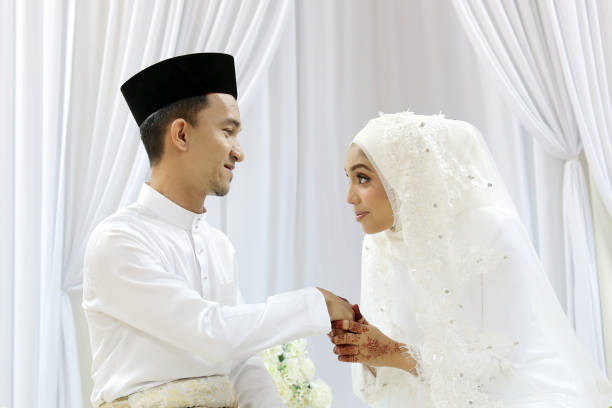
For Muslim couples in South Africa — whether in Gauteng, the Western Cape, KwaZulu-Natal, or travelling from the UAE, Nigeria, or elsewhere in the Muslim world — fertility treatment raises questions that go beyond biology. They reach into theology, family identity, and deeply held values about the sanctity of marriage and lineage.
This guide is not a fatwa. It does not tell you what to do or what God permits. It is a plain-language summary of the scholarly consensus that has emerged on IVF and assisted reproduction in Islam, the significant areas of ongoing debate, and the practical questions Muslim couples in South Africa need to raise — with both their doctors and their scholars.
| Important caveat: Islamic jurisprudence is rich, diverse, and school-of-thought specific. Sunni and Shia scholarly traditions approach several key questions differently. Individual scholars hold differing views. This article describes widely held positions — it does not determine the correct position for any individual Muslim couple. Always consult a qualified Islamic scholar whose opinion you trust before making decisions about fertility treatment. |
Islam, Family, and the Call to Seek Cures
Islam places profound value on family and on having children within a valid marriage. The Quran emphasises children as a blessing and procreation as part of the divine purpose of marriage. At the same time, Islam is a faith that explicitly encourages seeking cures for illness — the Prophet Muhammad (peace be upon him) is recorded as saying: ‘There is no disease that Allah has created, except that He also has created its treatment.’ Infertility is a medical condition. Seeking medical help for infertility is, within this framework, not in tension with faith — it is an expression of it.
The first scholarly engagement with IVF in the Muslim world came from Egypt in 1980, two years after the birth of the world’s first IVF baby. Sunni scholars at Al-Azhar University issued the foundational fatwa that has shaped Muslim thinking on IVF since: IVF is permissible, under specific conditions. Those conditions reflect the centrality of marriage and lineage in Islamic law.
When IVF Is Considered Permissible (Halal) in Islam
There is broad consensus among Islamic scholars — Sunni and Shia, across major schools of thought — that IVF is halal when all of the following conditions are met (NCBI Bookshelf; Samrudh Fertility; Alhaya Fertility, 2024–2025):
- The sperm and eggs used are from the husband and wife — no third-party donor involvement
- The fertilised embryo is transferred to and carried by the wife — not a surrogate
- The procedure takes place within a valid, existing marriage
- The procedure is conducted by qualified, ethical medical professionals
- Reasonable precautions are taken to prevent mixing of gametes or embryos from different couples
These conditions reflect the Islamic legal principle that lineage (nasab) must remain clear and unambiguous. The introduction of a third party’s genetic material — or a third party’s womb — disrupts the marital relationship in ways that Islamic law considers impermissible.
| IVF using only the husband’s sperm and the wife’s eggs, transferred to the wife’s uterus, is considered permissible (halal) by the majority of Islamic scholars, both Sunni and Shia, when conducted for a genuine medical need and by a qualified team. |
IUI (Intrauterine Insemination)
IUI using the husband’s own sperm is similarly considered permissible by the majority of scholars. It does not involve third-party gametes, and the procedure is significantly less invasive than IVF. The key requirement is the same: the sperm must be from the husband, used within a valid marriage.
One procedural consideration sometimes raised is the method of sperm collection. Most IUI and IVF protocols collect sperm through masturbation, which is a topic some scholars address specifically. Alternatives to masturbation — including collection through a specially designed condom during lawful marital relations — exist and may be discussed with your clinic.
Areas of Scholarly Debate
Donor Eggs and Donor Sperm
Among Sunni scholars, there is near-universal prohibition on the use of donor gametes — eggs donated by another woman or sperm from a man other than the husband. The argument is rooted in the protection of lineage: introducing a third party’s genetic material is understood to compromise the clarity of the child’s parentage, which is considered a fundamental obligation in Islamic law.
Among Shia scholars, the position is more varied. Ayatollah Khamenei in Iran issued a fatwa permitting egg donation under specific conditions — and this has influenced practice in Shia communities in Iran and among some Lebanese Shia scholars. However, many Shia scholars also maintain the prohibition on donor sperm. The diversity within Shia jurisprudence on this question is genuine and significant.
For Muslim couples in South Africa where infertility involves factors that cannot be overcome with own gametes — such as severe male factor requiring donor sperm, or premature ovarian insufficiency requiring donor eggs — this is one of the most difficult decisions they will face. There is no single ‘Islamic answer.’ This requires consultation with a scholar you trust, an honest medical conversation, and a decision that you and your partner make together.
Surrogacy
Surrogacy — the use of another woman’s womb to carry the embryo — is not permissible under Sunni Islamic jurisprudence. The maternal relationship is defined by the carrying and birth of the child, not only by genetic contribution. Some Shia scholars permit surrogacy where the genetic material is entirely from the married couple, but this is a minority position even within Shia scholarship.
Embryo Freezing and Surplus Embryos
Freezing embryos for future use by the same married couple is considered permissible by most scholars. The key conditions are: the embryos can only be used while the marriage is valid (if the couple divorces or one partner dies, further use of stored embryos becomes impermissible), and the embryos must be stored and used only by the couple they were created from — they cannot be donated to another couple.
The question of what to do with surplus embryos — those that cannot be used — is one of the more difficult ethical questions in Islamic fertility jurisprudence. Discarding them or donating them to another couple are both considered problematic by many scholars. Creating only the number of embryos intended for immediate use, or implanting all viable embryos across multiple cycles, are approaches some scholars have recommended. Discuss this explicitly with your fertility specialist and your scholar before beginning an IVF cycle.
PGT (Preimplantation Genetic Testing)
Genetic testing of embryos before transfer — PGT-A to screen for chromosomal abnormalities, or PGT-M to screen for inherited genetic disorders — is considered acceptable by most Islamic scholars when the purpose is medical: identifying embryos likely to fail or avoiding the transfer of embryos carrying serious genetic disease. Gender selection for non-medical reasons (selecting a boy or girl for preference alone) is more contentious and generally not endorsed.
Modesty, Privacy, and Practical Considerations
IVF and fertility treatment involve intimate physical procedures: transvaginal ultrasounds, egg retrieval, sperm collection. Islamic values around modesty (haya) and privacy mean that many Muslim patients want to know:
- Can I request a female doctor for all procedures? In South Africa’s leading fertility clinics, female specialists are available. This should be discussed at initial consultation.
- Who will be present during procedures? Clinics with experience in treating Muslim patients understand the preference for minimising male clinical presence during intimate procedures.
- Is there a halal way to collect sperm? Ask your clinic — alternatives to standard collection methods exist and can be accommodated at SASREG-accredited SA facilities.
- Will our information be kept confidential? Fertility treatment information in South Africa is protected under POPIA. Discretion is a standard expectation.
The Emotional and Spiritual Dimension
A Cape Town research study published in Tandfonline (2024) interviewed Muslim couples navigating fertility treatment and found that the intersection of religious prohibition (around donor gametes) and clinical need created profound distress. One couple described: ‘We have been trying treatment for some time now, but what makes it difficult is our religion.’ This is a real and significant tension that clinical staff who lack religious literacy often fail to acknowledge.
Infertility in the Muslim tradition — as in most faith traditions — raises profound questions about divine will. Is this Allah’s plan? Should we accept this? Are we playing God? These are not questions that a fertility navigator or a doctor can answer. But they are questions that deserve space — in conversations with a trusted scholar, in dua, in the quiet of your own heart.
Seeking fertility treatment and trusting in Allah are not opposites. They are, for many Muslim couples, the same act: doing what is within your capacity, and entrusting the outcome to God.
→ Find SASREG-accredited fertility clinics in South Africa
→ Infertility in the African community: cultural silence
| KEY TAKEAWAYS |
| ✓ IVF using husband’s sperm and wife’s eggs, carried by the wife, within marriage, is considered halal by the majority of Sunni and Shia scholars. |
| ✓ Donor eggs and donor sperm are prohibited in Sunni jurisprudence; Shia positions vary — consult a scholar from your tradition. |
| ✓ Surrogacy is generally not permissible in Sunni Islam; some Shia scholars permit it under strict conditions. |
| ✓ Embryo freezing for the same couple’s future use is permissible; discuss surplus embryo management with both your doctor and your scholar before starting IVF. |
| ✓ South Africa’s leading fertility clinics have experience treating Muslim patients — discuss modesty requirements at your first consultation. |
References
- NCBI Bookshelf (2015). Assisted Reproductive Technology: Islamic Perspective. Contemporary Bioethics.
- Samrudh Fertility (2024). Islamic perspectives on IVF.
- Alhaya Fertility Centre (2025). Halal IVF guide.
- Springer / Journal of Religion and Health (2024). Muslim communities and ART: a scoping review.
- ScienceDirect (2018). Ethical and religious dilemmas of modern reproductive choices: Islamic perspective.
- Tandfonline (2024). Access to ART: qualitative study of couples in Cape Town, SA.
Disclaimer: This article is for educational and informational purposes only. It does not constitute medical, religious, or legal advice. Cultural and religious perspectives are diverse — the descriptions here are general patterns, not prescriptions for any individual or community. Always consult qualified professionals for personalised guidance.
About the Author
Leigh-Ann Geydien is the founder of Fertility Solutions, South Africa’s only dedicated fertility directory. With a deep commitment to patient advocacy, she built the platform to bridge the gap between those navigating fertility challenges and the clinics and reproductive health specialists best placed to help them.