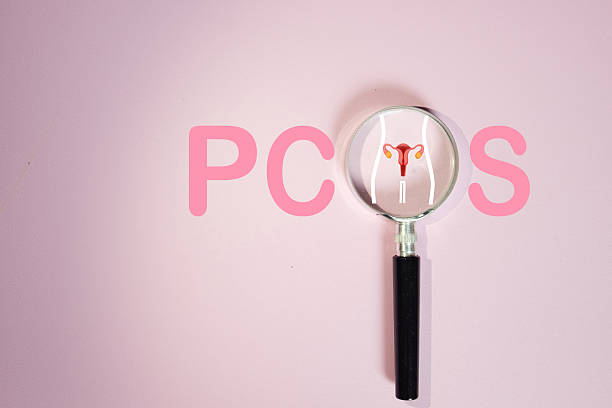
PCOS (polycystic ovary syndrome) is the most common hormonal condition affecting fertility in women — and one of the most misunderstood. It is not a sentence. Most women with PCOS who want to have children, do. But the path there is not always straightforward, and having accurate information from the start makes a real difference.
This guide covers what PCOS is, how it is diagnosed in South Africa, how it affects your ability to conceive, what treatment looks like at each stage, and what PCOS means for egg freezing, IVF, and long-term fertility planning.
What Is PCOS?
PCOS is a hormonal disorder affecting the ovaries. It is characterised by elevated androgens (male hormones), irregular or absent ovulation, and — on ultrasound — the appearance of multiple small follicles in the ovaries (the ‘cysts’ of the name, which are actually underdeveloped follicles rather than true cysts).
Diagnosis is made using the Rotterdam Criteria — a woman has PCOS if she meets two of the three following criteria:
- Irregular or absent periods (indicating irregular or absent ovulation)
- Clinical or biochemical signs of elevated androgens (acne, excess hair growth, elevated testosterone on blood test)
- Polycystic ovarian appearance on ultrasound (12 or more follicles per ovary, or ovarian volume over 10ml)
PCOS affects approximately 6–13% of women of reproductive age globally (WHO, 2024). Up to 70% of women with PCOS are undiagnosed (ASRM). In South Africa, PCOS is estimated to account for up to 40% of female infertility cases in some clinical reports (Wijnland Fertility, 2024).
How PCOS Affects Fertility
The primary fertility impact of PCOS is anovulation — irregular or absent ovulation. Without a released egg, natural conception is not possible in that cycle. This is why women with PCOS may try for months or years without success despite otherwise normal fertility.
The irregular cycles also make timing intercourse difficult — and make interpreting home pregnancy tests and cycle tracking apps unreliable. Many women with PCOS go through extended periods of confusion before a diagnosis is made.
| PCOS is not an infertility diagnosis. It is a cause of irregular ovulation — and ovulation can usually be restored with treatment. Most women with PCOS who want to conceive, will. |
Additional factors that complicate fertility in PCOS:
- Insulin resistance — present in approximately 70% of women with PCOS, it contributes to hormonal dysregulation and is associated with lower IVF success rates if not managed
- Elevated LH levels — can affect egg quality
- Elevated androgens — can affect endometrial receptivity
- OHSS risk — women with PCOS respond vigorously to fertility medications and are at higher risk of ovarian hyper-stimulation syndrome during IVF stimulation
PCOS Treatment for Fertility — A Step-by-Step Pathway
Step 1: Lifestyle Modification
For women with PCOS and elevated BMI, modest weight loss (5–10% of body weight) can restore spontaneous ovulation and dramatically improve treatment outcomes. This is not about aesthetics — it is about hormonal normalisation. Even in women with a healthy BMI, anti-inflammatory dietary patterns and exercise have demonstrated benefit. This should be the starting point for most women, alongside diagnosis.
Step 2: Ovulation Induction with Oral Medications
Letrozole (an aromatase inhibitor) is currently the first-line pharmacological treatment for ovulation induction in PCOS — it has displaced Clomiphene (Clomid) as the preferred first choice based on current evidence, including the 2023 ESHRE PCOS guideline. Letrozole produces a higher live birth rate and lower multiple pregnancy rate than Clomid in PCOS.
With Letrozole or Clomiphene, pregnancy rates of 60–70% within six treatment cycles are reported for appropriately selected patients (Extend Fertility data; ASRM). This is a meaningful statistic — most women with PCOS-related infertility do not need IVF.
Step 3: IUI with Ovarian Stimulation
If oral ovulation induction does not result in pregnancy after 3–6 cycles, or if there are additional factors (mild male factor, timing issues), IUI with controlled ovarian stimulation is the next step. Women with PCOS require careful monitoring during stimulation to avoid OHSS and multiple follicle development.
Step 4: IVF
IVF is typically reserved for women with PCOS who have not responded to simpler treatments, who have additional infertility factors (blocked tubes, significant male factor), or who are older and time-sensitive. Women with PCOS often have high egg yields during IVF stimulation — AMH levels in PCOS can be 2–3 times higher than in women without the condition, and average egg yields of 22.8 per cycle are reported versus 16.5 in non-PCOS controls (Extend Fertility, 2019).
The key risk in IVF for PCOS is OHSS. Most SA clinics use low-dose antagonist protocols and a GnRH agonist trigger (rather than hCG) to dramatically reduce this risk, followed by a freeze-all strategy and frozen embryo transfer in a subsequent cycle. This eliminates most serious OHSS risk while preserving IVF success rates.
PCOS and Egg Freezing in South Africa
Women with PCOS are actually well-positioned for egg freezing — their higher ovarian reserve typically means more eggs per cycle, and because PCOS is a condition that can worsen over time and may require surgical intervention, preserving eggs at a younger age is a meaningful option for women who want to delay family-building.
One study found that women with PCOS had a statistically significantly higher number of euploid (chromosomally normal) embryos from their frozen eggs compared to controls, because the higher egg yield compensated for any quality variability (Extend Fertility, 2019). The OHSS risk during egg freezing stimulation applies and must be carefully managed.
Egg freezing in South Africa costs approximately R33,000 for the procedure, medication, and 5 years of storage (Gift of Life estimate). For international context, the same procedure costs approximately USD $14,000 in the USA.
→ Egg freezing in South Africa: complete guide [link to Cluster 3 Pillar]
The Emotional Reality of PCOS
PCOS carries a significant psychological burden beyond its fertility implications. The visible symptoms — acne, excess hair growth, weight gain — affect body image and self-esteem. The uncertainty of irregular cycles makes family planning unpredictable. The diagnosis often comes as a relief (‘now I know why’) but is followed by anxiety (‘can I still have children?’).
In South African communities where significant social expectations around fertility exist, a PCOS diagnosis can feel isolating and shameful. It is not. One in ten women has PCOS — it is not rare, it is not a personal failing, and it is highly manageable.
PCOS in South African Cultural Context
Across South Africa’s diverse communities, irregular periods and difficulty conceiving carry different cultural meanings. In some communities, these are attributed to spiritual causes or discussed only within close family structures. In others, the stigma of infertility — regardless of cause — falls disproportionately on women. PCOS often goes undiagnosed for years in communities where gynecological care is not routinely accessed, or where symptoms are normalised as ‘just how my family is’.
Fertility Solutions works with clients across South Africa’s cultural spectrum and understands that the right support looks different for different communities. You do not have to navigate this in isolation.
| KEY TAKEAWAYS |
| ✓ PCOS is the most common hormonal cause of female infertility — but it is highly treatable. |
| ✓ Most women with PCOS who want to conceive do so — often without needing IVF. |
| ✓ Letrozole (first-line) and lifestyle modification are the starting points; IVF is reserved for more complex cases. |
| ✓ Women with PCOS typically have high egg yields in IVF — but carry higher OHSS risk requiring careful management. |
| ✓ PCOS is not a sentence — accurate information and the right support make all the difference. |
References
- WHO (2024). Fact sheet: Polycystic ovary syndrome.
- ESHRE (2023). International evidence-based guideline for the assessment and management of PCOS.
- Extend Fertility (2019). PCOS and egg freezing outcomes.
- Wijnland Fertility (2024). Female infertility: PCOS section.
- ASRM (2020). Diagnosis and treatment of PCOS: a committee opinion.
Disclaimer: This content is for educational purposes only and does not constitute medical advice. Always consult with a qualified healthcare provider before making decisions about fertility treatment.
About the Author
Leigh-Ann Geydien is the founder of Fertility Solutions, South Africa’s only dedicated fertility directory. With a deep commitment to patient advocacy, she built the platform to bridge the gap between those navigating fertility challenges and the clinics and reproductive health specialists best placed to help them.