Going into IVF knowing what to expect makes a real difference — not just clinically, but emotionally. The injections, the monitoring appointments, the waiting, the phone calls about embryo numbers — none of it is easy, but it is less frightening when you know what is coming.
This is a plain-language guide to exactly what happens during an IVF cycle at a South African fertility clinic.
Before You Start: Investigation and Protocol Planning
Before injections begin, your reproductive endocrinologist needs a full picture of your fertility: AMH, FSH, antral follicle count (via ultrasound), semen analysis, and uterine cavity assessment. These results determine your stimulation protocol — the type and dose of medications used. This workup takes 1–4 weeks if done from scratch.
You will also have a medication teaching session — either with a nurse or via video — to learn how to self-administer injections. This is manageable for most people. The needles are small and the technique is straightforward.
Phase 1: Ovarian Stimulation (Days 1–12 approximately)
Injections begin on Day 2 or 3 of your menstrual cycle. The goal is to stimulate multiple follicles to grow simultaneously — in a natural cycle, only one egg reaches maturity. Common medications include FSH (Gonal-F, Menopur, Follistim) and sometimes LH. A GnRH antagonist (Cetrotide or Orgalutran) is added around Day 6 to prevent premature ovulation.
During stimulation, you will attend the clinic every 2–3 days (then daily as retrieval approaches) for transvaginal ultrasound scans and blood tests. Early morning appointments are typical — most clinics do monitoring from 7am to minimise work disruption. Your doctor adjusts medication doses based on monitoring results.
| Side effects during stimulation: bloating (ovaries swell as follicles develop), mood changes, fatigue, and injection site bruising are common. Ovarian hyper-stimulation syndrome (OHSS) is a serious but manageable complication that your clinic monitors for throughout stimulation. |
Phase 2: Trigger Injection and Egg Retrieval
When your lead follicles reach the target size (approximately 18–20mm), your doctor instructs you to administer a trigger injection at a precise time — timing is critical, as retrieval is scheduled exactly 36 hours later.
Egg retrieval is a 20–30 minute surgical procedure performed at the fertility clinic under sedation (twilight anesthesia — you are not fully unconscious). A thin needle is guided vaginally using ultrasound to aspirate fluid from each follicle. You will feel some cramping afterwards and most women take one day off work. Results of how many eggs were retrieved are usually available within hours.
Phase 3: The Fertilisation Wait (Days 1–6)
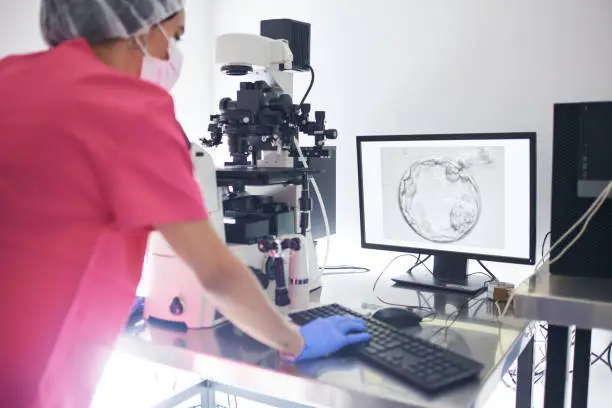
On the day of retrieval, your partner provides a sperm sample (or donor sperm is used). The embryology laboratory fertilises the mature eggs — using standard IVF or ICSI depending on your protocol. ICSI is commonly used in South Africa, particularly for male factor infertility or unexplained infertility.
The following 5–6 days involve watching embryo development. Your clinic will call with updates: Day 1 (fertilisation), Day 3 (early embryo quality), Day 5/6 (blastocyst development). Each update involves some attrition — not every egg fertilises, and not every fertilised egg develops to blastocyst stage. This is normal but emotionally difficult.
Phase 4: Embryo Transfer
Transfer typically occurs on Day 5 (blastocyst stage). One embryo is selected and transferred via a thin catheter passed through the cervix — a brief outpatient procedure, no sedation required. It feels similar to a cervical smear. You are usually discharged within 30 minutes. Progesterone support (pessaries, injections, or gel) begins after transfer to support the uterine lining.
Single embryo transfer is increasingly the standard in South African clinics — it eliminates the risk of twin pregnancy, which carries significant medical complications for both mother and babies. Additional viable embryos are frozen (vitrified) for future use.
Phase 5: The Two-Week Wait
The two-week wait is exactly what it sounds like — approximately 10–14 days between embryo transfer and pregnancy test. It is almost universally described as the hardest part of IVF. Progesterone creates pregnancy-like symptoms regardless of outcome, making symptom-watching unreliable. A blood test (beta-hCG) at the clinic gives the definitive result.
A positive result does not mean the pregnancy is secure — further monitoring (serial hCG tests, early ultrasound) is required before the 8-week scan. A negative result is a significant loss that deserves acknowledgement and time.
Frozen Embryo Transfers
If you have frozen embryos from a previous cycle, a frozen embryo transfer (FET) is a simpler, less invasive process. It typically takes 3–4 weeks and involves a uterine preparation protocol (usually estrogen and progesterone) followed by a single transfer. Costs are approximately R15,000–R25,000 compared to a full fresh IVF cycle.
→ Back to: IVF in South Africa: The Complete Guide
→ IVF success rates in South Africa — what the data actually shows
→ IVF cost breakdown 2025
| KEY TAKEAWAYS |
| ✓ IVF takes 6–8 weeks per fresh cycle from stimulation start to pregnancy test — plan for this timeline. |
| ✓ Daily injections for 10–12 days are manageable — clinics provide thorough training and support. |
| ✓ Embryo attrition between retrieval and blastocyst stage is normal and expected — not a sign of failure. |
| ✓ Single embryo transfer is standard in SA — frozen embryos from the same cycle can be used in future FET cycles. |
| ✓ The two-week wait is the most psychologically challenging phase — support during this period matters. |
References
- ESHRE (2023). IVF treatment guidelines.
- BioArt Fertility Centre (2025). IVF process overview.
Disclaimer: This content is for educational purposes only and does not constitute medical advice. Always consult with a qualified healthcare provider before making decisions about fertility treatment.
About the Author
Leigh-Ann Geydien is the founder of Fertility Solutions, South Africa’s only dedicated fertility directory. With a deep commitment to patient advocacy, she built the platform to bridge the gap between those navigating fertility challenges and the clinics and reproductive health specialists best placed to help them.