
South Africa is one of the most significant fertility treatment destinations especially for IVF in the world. Its leading clinics operate with internationally accredited protocols and laboratory standards, specialists trained in Europe and North America, and — critically — at a fraction of the cost of equivalent treatment in the USA, UAE, or UK.
Whether you are living in South Africa and trying to navigate local treatment options, or you are considering travelling to Cape Town or Johannesburg from Nigeria, Kenya, the UAE, the UK, or further afield, this guide covers everything you need to know about IVF in South Africa.
Table of Contents
- What is IVF and how does it work?
- Who needs IVF?
- The IVF process step by step in South Africa
- IVF success rates in South Africa — what the data shows
- What does IVF cost in South Africa in 2025?
- Medical aid coverage for IVF in SA
- The public sector option
- IVF for international patients — why South Africa?
- How to choose an IVF clinic in South Africa
- What a fertility navigator does during IVF
What Is IVF and How Does It Work?
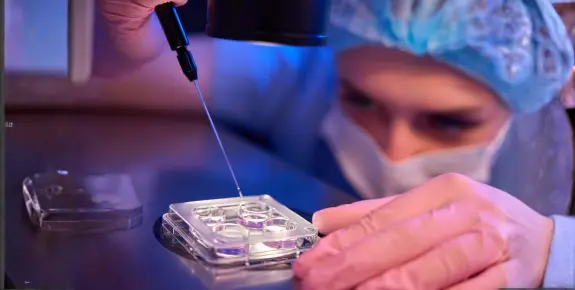
In vitro fertilisation (IVF) is an assisted reproductive technology in which eggs are retrieved from the ovaries, fertilised with sperm in a laboratory, allowed to develop for 3–6 days as embryos, and then transferred to the uterus. Fertilisation occurs outside the body — in vitro means ‘in glass’.
IVF is used when the fallopian tubes are blocked or absent, when sperm quality is poor (in which case ICSI — intracytoplasmic sperm injection — is used to inject a single sperm directly into each egg), when ovulation disorders are present, when unexplained infertility has not responded to simpler treatments, or when fertility preservation is needed before cancer treatment.
IVF is not always the first step. For many couples, simpler treatments — ovulation induction, IUI — are appropriate first-line options. Your reproductive endocrinologist will determine which pathway is right for your diagnosis.
Who Needs IVF?
IVF is recommended in the following situations:
- Blocked, damaged, or absent fallopian tubes
- Severe male factor infertility (low count, poor motility, abnormal morphology) — often combined with ICSI
- Unexplained infertility that has not responded to IUI or ovulation induction
- Diminished ovarian reserve (low AMH or AFC) — where time is a clinical variable
- Age over 38 — where IVF offers higher per-cycle success rates than simpler treatments
- Repeated IUI failures
- Endometriosis affecting the tubes or ovaries
- Preimplantation genetic testing required (PGT — to screen embryos before transfer)
- Use of donor eggs, donor sperm, or a surrogate
The IVF Process Step by Step in South Africa
Step 1: Initial Consultation and Investigation
Before starting IVF, a complete fertility workup is required for both partners: ovarian reserve testing (AMH, FSH, AFC), semen analysis, and uterine assessment. Your reproductive endocrinologist will use these results to plan your protocol. This stage takes 1–2 months if investigation is done from scratch.
Step 2: Ovarian Stimulation (approximately 10–14 days)
Self-administered daily hormone injections (FSH, sometimes with LH) stimulate the ovaries to produce multiple follicles instead of the single egg produced in a natural cycle. You will attend the clinic every 2–3 days for ultrasound monitoring and blood tests to track follicle development and adjust doses. This phase requires commitment to early morning appointments.
Step 3: Trigger Injection and Egg Retrieval
When follicles reach maturity, a trigger injection (hCG or GnRH agonist) is administered at a precise time — exactly 36 hours before retrieval. Egg retrieval is a 20–30 minute surgical procedure under sedation. A needle is guided vaginally using ultrasound to aspirate fluid from each follicle. Most women take one day off work.
Step 4: Fertilisation and Embryo Development (Days 1–6)
Retrieved eggs are assessed by an embryologist. Mature eggs are fertilised either by standard IVF (sperm added to a dish with eggs) or ICSI (single sperm injected directly into each egg). ICSI is commonly used in South Africa, particularly for male factor infertility or unexplained infertility. Over the following 3–6 days, the clinic monitors embryo development. Most couples receive daily updates. This is one of the most emotionally demanding periods of the IVF cycle — attrition from eggs retrieved to viable embryos is a source of significant anxiety.
Step 5: Embryo Transfer
On Day 5 (blastocyst stage), one or sometimes two embryos are transferred to the uterus via a thin catheter — a brief outpatient procedure requiring no sedation. Single embryo transfer is increasingly standard in South Africa to minimise twin pregnancy risk. Any remaining viable embryos are frozen for future transfers.
Step 6: The Two-Week Wait and Pregnancy Test
The most psychologically difficult phase. A blood test (beta-hCG) approximately 10–14 days after transfer confirms whether implantation has occurred. The emotional experience of waiting — and the grief of a negative result — should not be underestimated.
| IVF is not a single event — it is a 6–8 week process with daily decisions, multiple clinic visits, significant hormonal impact, and significant emotional weight. Preparation and support matter. |
IVF Success Rates in South Africa
South Africa does not have a national outcomes registry equivalent to SART (USA) or HFEA (UK). The following estimates are based on published international data from ESHRE and WHO, which are broadly applicable to SA’s leading private fertility centres. Success rates vary significantly by age:
- Under 35: approximately 35–45% live birth rate per embryo transfer
- Age 35–37: approximately 25–35% per transfer
- Age 38–40: approximately 15–22% per transfer
- Age 41–42: approximately 8–13% per transfer
- Over 42 with own eggs: significantly lower — donor eggs typically recommended
These are per-cycle figures. Cumulative success over multiple cycles is higher — research suggests 54–77% of women who pursue IVF achieve pregnancy by the 6th–8th cycle (ASRM, UNSW data cited by SART).
| Important context: A 40% success rate means 40 pregnancies per 100 cycles — and 60 people who will grieve a failed cycle. Success rates are real, but they are not guarantees. Honest expectation-setting is part of responsible fertility navigation. |
IVF Cost in South Africa 2025
IVF in South Africa costs significantly less than equivalent treatment in most developed countries. Published clinic data for 2025:
- BioArt Fertility Centre (Johannesburg): approximately R90,000 per cycle including medication, monitoring, retrieval, lab, and transfer
- LifeArt Fertility Clinic: IVF with ICSI from approximately R45,000
- Cape Fertility (Cape Town): costs are highly individualised — consultation required for accurate quote
- Embryo freezing (cryopreservation): approximately R5,000–R10,000 additional
- Frozen Embryo Transfer (FET): approximately R15,000–R25,000
- ICSI: may be included or charged separately — confirm with your clinic
- PGT-A (genetic testing of embryos): approximately R15,000–R25,000 additional
For international comparison: IVF in the USA costs approximately USD $15,000–$20,000 per cycle; in the UAE approximately AED 25,000–55,000; in the UK approximately £5,000–£8,000. At current exchange rates, a South African IVF cycle costs approximately USD $5,000–$6,000 — a saving of 60–75% versus US pricing.
Medical Aid Coverage for IVF in South Africa
Most South African medical aid schemes do not cover IVF or assisted reproduction. Key points:
- Infertility investigation is a Prescribed Minimum Benefit (PMB) — medical aids must cover diagnosis
- Discovery Health’s top plans (Executive, Comprehensive) now include an Assisted Reproductive Therapy Benefit — subject to age limits, cycle limits, and pre-authorisation requirements. Check your specific plan.
- Medication is typically not covered even under plans with IVF benefit
- Most other open medical aids do not cover treatment — patients pay out of pocket
Fewer than 16% of South Africans have medical aid coverage, and the vast majority of fertility treatment is self-funded (PMC, 2025). Financial planning before starting treatment is essential.
The Public Sector Option
Three South African government hospitals offer IVF in the public sector, where patients typically pay only for medication:
- Groote Schuur Hospital, Cape Town
- Tygerberg Hospital, Cape Town (Stellenbosch University)
- Steve Biko Academic Hospital, Pretoria
Waiting lists are long and criteria apply, but for couples who cannot access private care, this is a legitimate and important option. A fourth public unit in Johannesburg is being established (PMC, 2025).
IVF for International Patients — Why South Africa?
South Africa — particularly Cape Town — has become a significant medical travel destination for fertility treatment. The reasons are structural:
- Internationally accredited private fertility centres using protocols and equipment equivalent to European standards
- Cost advantage of 60–75% versus USA or UAE
- Large, diverse egg and sperm donor pool
- Liberal and clear legal framework for donor conception and surrogacy
- Established medical tourism infrastructure — world-class hospitals, easy flight access from Africa, the Middle East, and Europe
Most international couples travelling to Cape Town for IVF should budget 3–4 weeks for the stimulation and retrieval phase. Frozen embryo transfer can sometimes be coordinated with local monitoring in the home country.
→ Travelling to South Africa for fertility treatment — what you need to know [link to relevant article on FS site]
→ IVF cost comparison: South Africa vs UAE, UK, Nigeria [link to cost comparison article on FS site]
How to Choose an IVF Clinic in South Africa
South Africa has approximately 23 registered fertility centres (PMC, 2025). Key considerations when choosing:
- SASREG registration — ensure your clinic is registered with the South African Society of Reproductive Medicine and the National Department of Health
- Embryology laboratory quality — ask about air filtration systems, incubator type, and vitrification protocols
- Specialist credentials — look for reproductive endocrinologists trained at internationally recognised programmes
- Single embryo transfer policy — clinics committed to elective single embryo transfer demonstrate evidence-based practice
- Communication — can you reach your care team between appointments? Is there a patient support coordinator?
- Location — especially relevant for international patients; Cape Town and Johannesburg are the two primary centres
→ Fertility clinic comparison: South Africa’s leading centres [link to Article 1.5 in this cluster]
What a Fertility Navigator Does During IVF
A fertility navigator does not replace your reproductive endocrinologist. They work alongside your medical team to help you understand what is happening at each stage of your IVF journey, prepare questions before consultations, make sense of results as they come in, manage the emotional demands of the process, and — for international patients — coordinate logistics.
For couples going through IVF for the first time, or pursuing multiple cycles, or navigating this from abroad, a navigator reduces the cognitive and emotional load significantly.
→ How the Fertility Solutions Concierge Service works
| KEY TAKEAWAYS |
| ✓ IVF involves ovarian stimulation, egg retrieval, laboratory fertilisation, and embryo transfer — a 6–8 week process per cycle. |
| ✓ Success rates vary significantly by age — under 35: 35–45% per transfer; over 40: significantly lower. |
| ✓ IVF in South Africa costs approximately R45,000–R90,000 per cycle — 60–75% less than equivalent care in the USA. |
| ✓ Most medical aids do not cover IVF — Discovery Health’s top plans are a notable exception. |
| ✓ South Africa’s leading fertility centres are internationally accredited and attract patients from across Africa, the Middle East, Europe and beyond. |
References
- BioArt Fertility Centre (2025). Treatment costs. bioartfertility.co.za
- LifeArt Fertility Clinic (2024). Costing. lifeartfertility.co.za
- PMC (2025). Fertility care in low- and middle-income countries: training in assisted reproduction in South Africa.
- ESHRE (2023). ART in Europe register data.
- ASRM / SART (2024). IVF success rate data.
Disclaimer: This content is for educational purposes only and does not constitute medical advice. Always consult with a qualified healthcare provider before making decisions about fertility treatment.
About the Author
Leigh-Ann Geydien is the founder of Fertility Solutions, South Africa’s only dedicated fertility directory. With a deep commitment to patient advocacy, she built the platform to bridge the gap between those navigating fertility challenges and the clinics and reproductive health specialists best placed to help them.