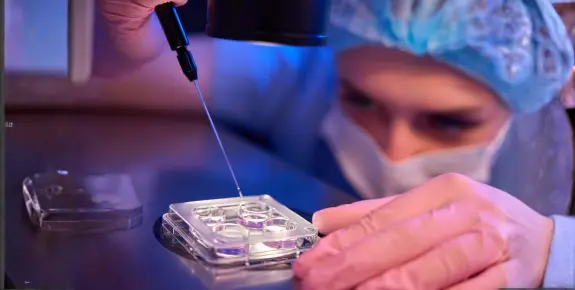

Egg freezing is also known as mature oocyte cryopreservation. It is a process of freezing one or more unfertilised eggs that is later used to save women’s ability to get pregnant in the future.
The eggs are gathered from your ovaries and frozen and stored until needed at a later stage. Once the female is ready to undertake the process of IVF, the eggs are thawed, fertilised and combined with sperm in a lab ready to be implanted in your uterus.
Why is egg freezing done?
Egg freezing is one option that is available to women who are not ready to have children but want to try and ensure they can get pregnant at a later stage in their life. The process of egg freezing does not require sperm because the eggs are not fertilised before being frozen. However, with embryo freezing, you are required to use fertility medication to make you ovulate in order to produce multiple eggs for retrieval.
Women can consider egg freezing if:
- You have an underlying condition that may have an effect on your fertility
- You need treatment for cancer or another illness that can affect your ability to get pregnant
- Undergoing the process of IVF
- Preserving your eggs at a young age for future use
The advantages includes:
- Increases the coverage choice for women
- Women are given more childbearing options
- The decision-making power is in the hands of women
How are the eggs retrieved from your uterus?
Retrieval of eggs are done under sedation at a doctor’s office or clinic. One of the common methods used is transvaginal ultrasound aspiration, this is where an ultrasound probe is inserted into the vagina to detect the follicles. A needle is then used and guided into the vagina and follicles. A suction device is connected to the needle to take out the egg from the follicle. Multiple eggs can be retrieved as it increases the chances of birth. Once the process is completed, women may experience pressure and pain for weeks as your ovaries remain enlarged. You may resume normal activity after a week or two depending on your pain tolerance. Women should avoid having sex to prevent an unexpected pregnancy.
If this is something you would like to do, consulting your doctor is the first thing you need to do. This will help you understand the process of egg freezing and decide if this method is right for you based on your needs and reproductive history.